What’s In Your Water?
Well & Whole
Water & Health
Mountain & Main Editorial · April 2026
A landmark federal announcement just put microplastics at the center of America's drinking water conversation. Here's what Wasatch Front families need to know — and what they can do about it right now.
Think about the last glass of water you poured from your kitchen tap. You probably didn't think twice about it. That's exactly the point.
On April 2, 2026, the U.S. Environmental Protection Agency and the Department of Health and Human Services held a joint press conference in Washington to announce something that had never happened before in the history of federal drinking water oversight: microplastics were officially designated a priority contaminant group in the EPA's draft Sixth Contaminant Candidate List — the agency's formal mechanism for identifying substances that may require regulation in public water systems. That same day, HHS Secretary Robert F. Kennedy Jr. announced the launch of STOMP — Systematic Targeting of MicroPlastics — a $144 million national research initiative to measure, study, and ultimately develop strategies to remove microplastics from the human body.
These are big moves. And while the science is still catching up to the scale of the problem, what we already know is worth paying attention to — especially if you live on the Wasatch Front, where the water flowing through your home originates in some of the most studied waterways in the American West.
What microplastics actually are
Microplastics are fragments of plastic less than five millimeters in size — smaller than a popcorn kernel — that form as plastic products break down over time. They come from an enormous range of sources: single-use water bottles, synthetic clothing fibers, food packaging, plastic pipes, and more. They end up in rivers, soil, air, and eventually, water systems. Because they're so small, conventional treatment processes don't catch all of them.
What has alarmed researchers is where they're showing up in the body. According to the ARPA-H announcement, studies have now detected microplastics in human lungs, in arterial plaques — the buildup associated with cardiovascular disease — in brain tissue, in blood, in breast milk, and in the placenta. "Microplastics are in every organ we look at — in ourselves and in our children," said ARPA-H Director Dr. Alicia Jackson. "But we don't know which ones are harmful or how to remove them."
That last sentence is important. The science is real, the presence is confirmed, but the specific health effects of long-term exposure are still being studied. The STOMP program is designed precisely to close that gap — to move from "we know they're there" to "here's what they do and here's what we can do about it."
"Microplastics are in every organ we look at — in ourselves and in our children. But we don't know which ones are harmful or how to remove them."
— Dr. Alicia Jackson, ARPA-H Director
What the federal announcement actually means
It helps to understand what the EPA's Contaminant Candidate List does — and doesn't — do. Adding microplastics to the list is not a regulation. It doesn't immediately change what comes out of your tap or place any new requirements on your local water utility. What it does is formally unlock research funding, prioritize information collection, and set the stage for potential future regulation. Think of it as the beginning of a long road, not the destination.
The 60-day public comment period now underway (through the EPA's online docket system) is the first opportunity for the public — including Wasatch Front residents — to formally weigh in. After that period closes, the EPA will consult its independent Science Advisory Board before finalizing the list, which is expected to be signed by November 2026.
The STOMP program runs in three phases: measuring microplastic levels in water and human tissue using standardized detection methods, identifying which plastic contaminants are most harmful and how they move through the body, and developing strategies to remove them. It's a five-year program. Answers won't come overnight — but at $144 million, it represents the most significant federal investment in this area to date.
A local angle: your water's journey
On the Wasatch Front, drinking water reaches homes primarily through three major sources:
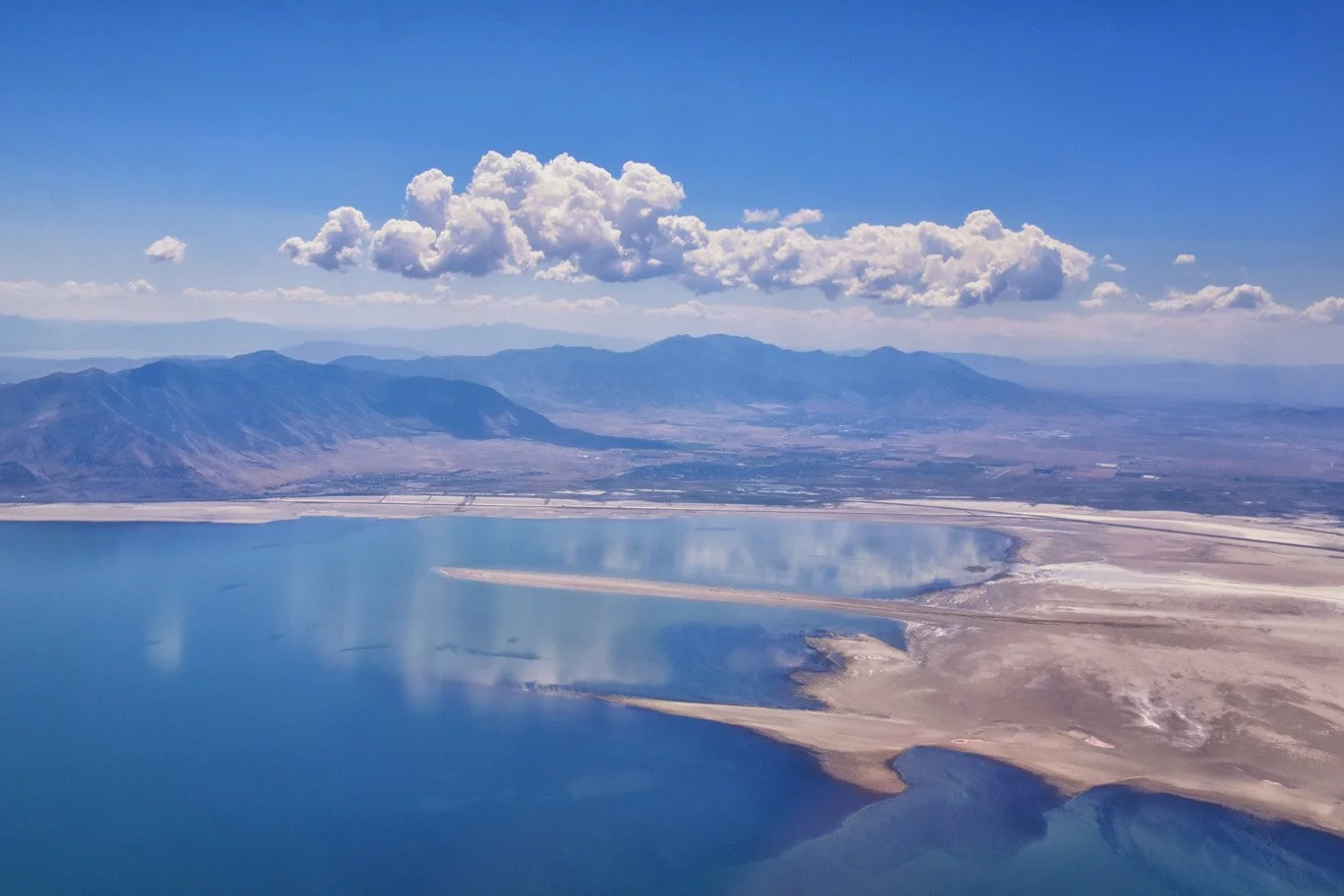
The Bear River, which drains into the Great Salt Lake basin from the north; the Weber River, which supplies much of northern Utah through the Weber Basin Water Conservancy District; and the Jordan River, which carries water southward from Utah Lake toward the Salt Lake Valley. All three are part of a closed terminal basin — meaning water that enters the Great Salt Lake watershed doesn't naturally flow out to the ocean. What comes in stays in.
That matters for understanding microplastic contamination. Conventional municipal water treatment systems — the kind operating across Salt Lake, Davis, Weber, and Utah counties — typically achieve 70 to 90 percent removal of microplastic particles through standard filtration and settling processes. But some of the smallest particles, particularly nanoplastics, can persist through treatment. No Utah municipality currently has a specific regulatory obligation to test for or limit microplastics in drinking water. That may change as the CCL 6 process advances, but for now, the landscape is one of monitoring and emerging awareness rather than active remediation.
Wasatch Front residents can check their municipality's annual Consumer Confidence Report — a required publication from all public water utilities — to see what contaminants are currently tested and tracked in their local system. Most are available on your water utility's website, or by request.
The bottled water myth
If your instinct is to reach for a case of bottled water as a precaution, the science suggests that's not the solution — and may actually make things worse. A 2026 study published in the journal Science of the Total Environment by researchers at Ohio State University found that bottled water contains roughly three times as many nanoplastic particles as treated tap water. A significant portion of those particles come directly from the bottle itself — shed from the plastic packaging, especially at the cap, every time it's opened and closed.
Most independent research teams have now reached similar conclusions: treated municipal tap water, on average, carries fewer microplastic particles than commercially bottled water. The bottled water industry has benefited enormously from consumer perception that their product is cleaner — but on the specific question of microplastics, tap water from a properly functioning municipal system tends to come out ahead.
What you can actually do right now
Practical steps for Wasatch Front families
Consider a reverse osmosis filter. Studies show RO systems remove upwards of 99 percent of microplastics through a semi-permeable membrane with pore sizes far smaller than even the tiniest plastic particles. Under-sink RO systems are widely available and sold throughout the Wasatch Front. Countertop RO options work well for renters.
Know your standard pitcher filter's limits. Activated carbon filters — the kind in Brita-style pitchers and many refrigerator dispensers — improve taste and reduce chlorine but are not designed to catch microplastics. Their pore sizes are generally thousands of times larger than RO membranes.
Skip the single-use plastic bottle. Switch to stainless steel or glass for your daily hydration. It reduces your exposure and cuts down on the plastic entering the waste stream in the first place.
Don't heat food in plastic containers. Heat accelerates the breakdown of plastics and increases the likelihood of particles entering your food.
Read your water utility's Consumer Confidence Report. It won't list microplastics yet — but knowing what your local system tests for and treats is a good baseline for understanding your tap water.
Submit a public comment. The EPA's 60-day public comment period on CCL 6 is open now. Wasatch Front residents can weigh in at regulations.gov, docket number EPA-HQ-OW-2022-0946.
The bigger picture
The April 2 announcement represents something genuinely new: bipartisan federal acknowledgment that microplastics in drinking water and in the human body are a serious enough concern to warrant coordinated national action. That's worth noting. It's also worth keeping in perspective. This is the beginning of a regulatory and research process — one that will unfold over years, not months. In the meantime, the most honest thing we can say to Wasatch Front families is this: the presence of microplastics in water and in our bodies is real and confirmed. The specific health risks are still being studied. And there are practical steps you can take today that are both reasonable and science-backed.
At Mountain & Main, we'll continue tracking this story — including through The Great Lake Watch, where water quality, sourcing, and policy intersect directly with life along the Front. The water that flows through your tap has a long journey before it gets there. It deserves your attention.
Sources
EPA press release: "EPA Takes Bold Action to Ensure Drinking Water is Safe from Microplastics, Pharmaceuticals, and Potential Hidden Contaminants." April 2, 2026. epa.gov
HHS/ARPA-H press release: "ARPA-H Launches Groundbreaking, $144 Million Program to Combat Toxic Microplastics in the Human Body." April 2, 2026. hhs.gov
Jamison Hart et al., "What's in your water? A comparative analysis of micro- and nanoplastics in treated drinking water and bottled water." Science of the Total Environment. Published February 2026. Ohio State University.
CBS News: "HHS announces $144 million program to study effect of microplastics on the human body." April 2, 2026.
Chemical & Engineering News: "US government targets microplastics for research and potential drinking-water regulation." April 3, 2026. cen.acs.org
EPA Safe Drinking Water Act: Contaminant Candidate List background. epa.gov
This article was developed with AI assistance and reviewed for editorial accuracy by Mountain & Main staff. All factual claims are sourced as noted above.