
Some Vegetables Are Actually More Nutritious When Cooked
By The Well & Whole Staff
We've all heard the advice: eat more raw vegetables. And while that's sound guidance in many cases, the full story is more nuanced — and more interesting. For a handful of vegetables, cooking doesn't diminish their nutritional value. It amplifies it.
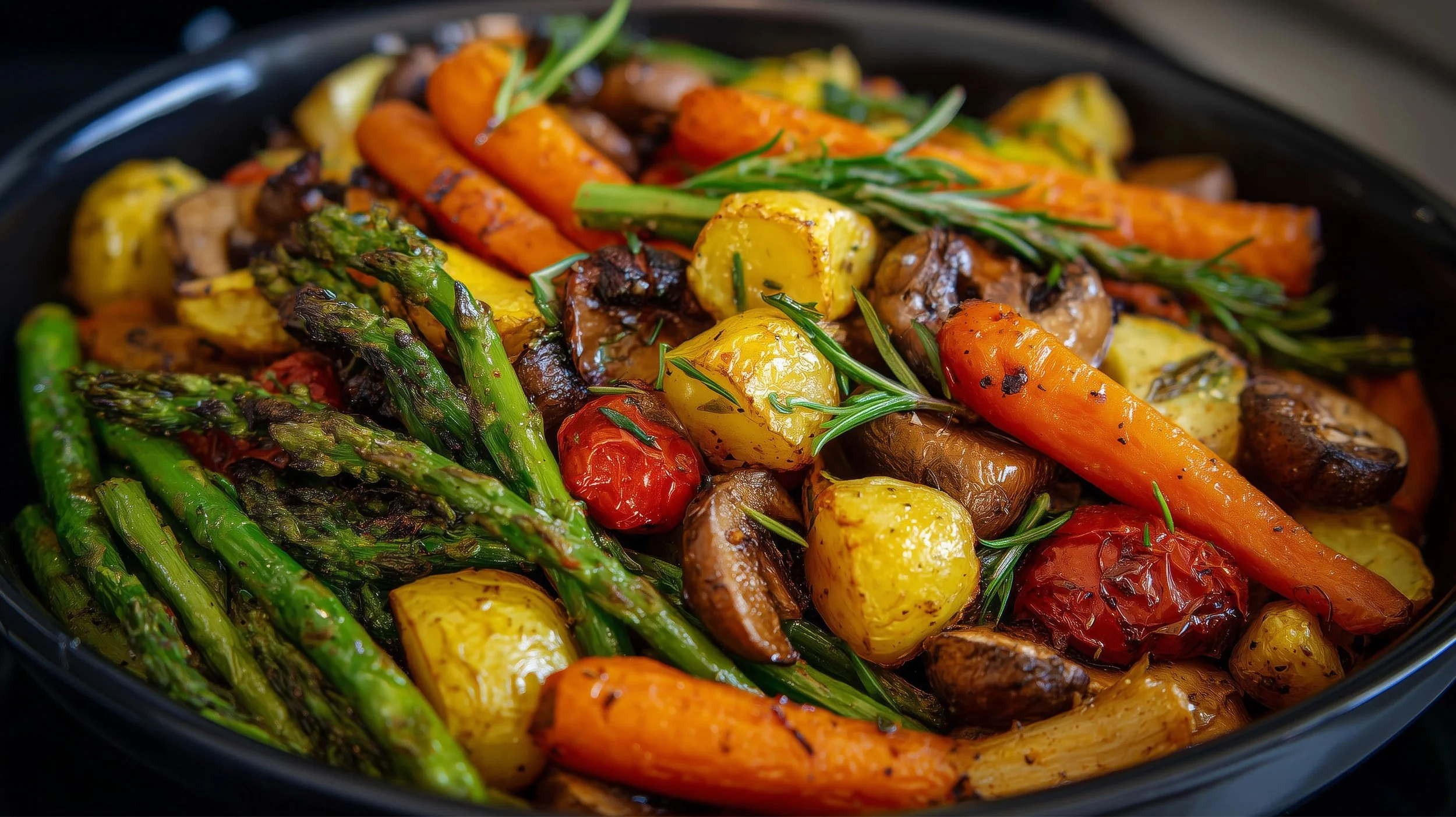
Whole foods, thoughtfully prepared, remain the foundation of a well and whole life.
The key is a concept called bioavailability — the degree to which your body can actually absorb and use the nutrients a food contains. A vegetable can be loaded with beneficial compounds, but if your digestive system can't access them, much of that value passes right through. Heat, it turns out, is sometimes the key that unlocks the door.
Tomatoes
Raw tomatoes are good. Cooked tomatoes are better — at least when it comes to lycopene, the powerful antioxidant that gives tomatoes their red color and has been linked to reduced risk of certain cancers and heart disease. Cooking breaks down the tomato's cell walls and converts lycopene into a form the body absorbs far more efficiently. Studies show that processed tomato products like sauce, paste, and even canned tomatoes deliver significantly more bioavailable lycopene than their raw counterparts. Adding a healthy fat like olive oil increases absorption even further.
Carrots
Beta-carotene — the compound your body converts into vitamin A — is housed inside the tough cell walls of raw carrots. Cooking softens those walls and dramatically increases the amount of beta-carotene your body can absorb. One study found that cooked carrots released nearly three times more beta-carotene than raw. Vitamin A supports eye health, immune function, and skin integrity, making this a meaningful nutritional upgrade.
Spinach
Raw spinach is rich in calcium and iron, but it's also high in oxalic acid — a naturally occurring compound that binds to those minerals and blocks their absorption. Cooking spinach significantly reduces oxalic acid levels, freeing up more of the calcium and iron for your body to use. Cooked spinach also releases more lutein, an antioxidant associated with eye health.
Asparagus
Cooking breaks down asparagus's tough plant cell walls, releasing higher levels of antioxidants including vitamins A, C, and E, as well as ferulic acid, a compound with anti-inflammatory properties. Studies comparing raw versus cooked asparagus consistently show greater antioxidant activity after cooking.
Mushrooms
Mushrooms are unique — their cell walls are made of chitin, a tough material that human digestive enzymes struggle to break down. Cooking disrupts that structure and dramatically increases the availability of key nutrients including potassium, niacin, and zinc. Raw mushrooms, by contrast, deliver far less of what they appear to contain on paper.
A Word of Balance
None of this means raw vegetables are without value — many are nutritional powerhouses best left uncooked. Broccoli, for example, contains an enzyme called myrosinase that activates its cancer-fighting sulforaphane compounds, and excessive heat can destroy that enzyme. (A light steam is ideal.) The broader takeaway is that cooking method matters, and matching the right preparation to the right vegetable is one of the simplest ways to get more from what you eat.
Whole foods, thoughtfully prepared, remain the foundation of a well and whole life.
Research compiled with AI assistance. All sources independently verified by Mountain & Main editorial staff.Sources
Fielding, J.M., et al. "Increases in Plasma Lycopene Concentration After Consumption of Tomatoes Cooked With Olive Oil." Asia Pacific Journal of Clinical Nutrition, 2005.Livny, O., et al. "Beta-carotene bioavailability from differently processed carrot meals in human ileostomy volunteers." European Journal of Nutrition, 2003.Chai, W., and Liebman, M. "Effect of different cooking methods on vegetable oxalate content." Journal of Agricultural and Food Chemistry, 2005.Guo, W., et al. "Antioxidant activity of asparagus extracts after cooking." Food Chemistry, 2012.Beelman, R.B., et al. "Nutritional value of mushrooms: impact of processing." International Journal of Medicinal Mushrooms, 2020.