

The End of the "Overdone" Look: Why Utah is Embracing Regenerative Aesthetics
By the Well & Whole Editorial Team
Something has shifted along the Wasatch Front. Look around at a coffee shop in Sugar House, a trailhead parking lot in Millcreek, or a neighborhood dinner party in Draper, and you will notice it in how locals are approaching the aging process. The frozen foreheads and over-plumped cheeks that defined the last decade of aesthetic medicine are fading. In their place is something quieter and far more flattering: skin that simply looks healthy.
That shift has a name. It is called regenerative aesthetics, and its philosophy fits the Utah lifestyle almost too perfectly. We meal-prep. We hike Mount Olympus before work. We talk openly about sleep, stress, and what we put into our bodies. A temporary cosmetic fix was always going to feel out of step with that. What Utahns want now is skin health that matches the rest of their wellness routine — earned gradually, built from the inside, and unmistakably their own.
"Not just in Utah, but everywhere, we're seeing a shift away from the 'overdone' look and toward more natural results," says Jackie Soweidan, a cosmetic nurse injector at Haus of Aesthetics. "Biostimulatory treatments work with your body to stimulate collagen production, improving skin quality, structure and firmness over time. Patients are drawn to these injectables because the results are gradual, subtle and natural looking, enhancing their features over time."
The Altitude Tax
Before getting into the science, it is worth acknowledging what Wasatch Front skin is actually up against. Living at 4,000-plus feet means thinner atmosphere and a significantly higher dose of ultraviolet radiation, whether you are logging miles on the Bonneville Shoreline Trail in July or riding a chairlift at Alta in February. Add the bone-dry humidity of a high-desert climate and the particulate load that settles into the valley during winter inversions, and you have a daily assault on the skin barrier.
All of that environmental pressure wears down the skin's foundational proteins — collagen and elastin — faster than it would at sea level. Traditional hyaluronic acid fillers sit in the tissue and occupy the space that lost collagen used to hold. That is useful for contouring, but it does nothing to rebuild what the climate has taken. Regenerative treatments take a different approach entirely.
From Filling to Rebuilding
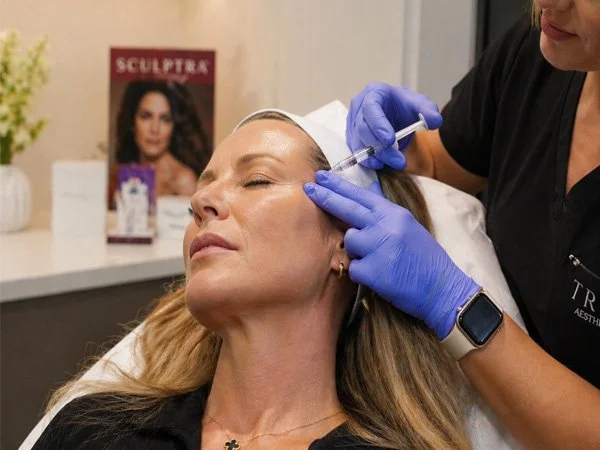
Rather than placing a gel where volume has been lost, biostimulators like Sculptra and Radiesse are introduced into deeper layers of the skin, where they act as a signal to the body. Fibroblasts — the cells responsible for producing structural proteins — are prompted back into activity. Over the following weeks and months, the skin generates its own new collagen network.
The timeline is the point. Results appear gradually instead of overnight, which is exactly why the approach is gaining traction with patients who want to look like themselves, only rested.
"Using a biostimulatory approach has become increasingly preferred because it enhances what patients naturally have rather than altering their features," explains Aysia Toronto, a cosmetic nurse injector at Haus of Aesthetics SLC. "These treatments work by stimulating the body's own collagen production, gradually rebuilding the skin's underlying structure over time. By strengthening the skin from within, patients experience results that are subtle, progressive, and longer lasting compared to traditional fillers. This shift reflects a broader movement toward regenerative aesthetics where the goal is not to look 'done,' but to look refreshed, healthy, and authentically like yourself."
Built for an Active Lifestyle
Beyond the natural-looking results, regenerative treatments hold particular appeal for the way Utahns actually live. Most require minimal downtime. A Thursday-afternoon appointment does not derail a Friday meeting or a Saturday morning in the Uintas. And because the treatments work with the body's own healing systems, the lifestyle habits that most Utahns already practice — good nutrition, hydration, consistent movement — actively support the results.
That alignment is arguably the most important part of the story. Regenerative aesthetics is not a shortcut. It is an investment in the same biological processes that make the rest of a healthy lifestyle pay off.
Aging well along the Wasatch Front does not require choosing between a fully lived-in life and looking like yourself while you live it. It just requires picking tools that are built for both.

Sculptra, Radiesse, and other regenerative treatments are available at Haus of Aesthetics. To book a consultation, visit Haus of Aesthetics
Research compiled with AI assistance. All sources independently verified by Mountain & Main editorial staff.