

Breathing Easy When the Valley Can’t
Protecting Your Health During Utah's Inversion Season
– By Mountain & Main Staff • Sunday, January 18, 2026
This week, Salt Lake City earned a distinction no one wants: the worst air quality in the nation. The familiar gray blanket has settled over the Wasatch Front once again, trapping cold air and pollution in our valleys while cleaner air sits tantalizingly out of reach at higher elevations.
For longtime residents, winter inversions are as predictable as the ski season. But understanding what's actually happening—and what you can do about it—makes the difference between weathering these episodes and suffering through them.
What's Actually Happening
Under normal conditions, air temperature decreases with altitude, allowing pollutants to rise and disperse. During an inversion, a layer of warm air acts like a lid over our valleys, trapping cold air—and everything in it—below. The Wasatch and Oquirrh mountains that make our region so spectacular also create the bowl that holds pollution in place until weather systems strong enough to break the pattern move through.
According to the Utah Department of Environmental Quality, a typical Utah winter brings five to six multi-day inversion episodes, with roughly 18 days of elevated PM2.5 levels—those microscopic particles small enough to penetrate deep into your lungs and even enter your bloodstream.
Where does this pollution come from? Mobile sources—primarily vehicle exhaust—account for nearly half of wintertime particulate pollution. Area sources like home heating and wood burning contribute about 39 percent, with industrial point sources making up the remainder.
The Health Stakes
A 2020 study published in the peer-reviewed journal Atmosphere, conducted by researchers from BYU, the University of Utah, and Utah State University, put numbers to what many suspected: Utah's air pollution causes between 2,500 and 8,000 premature deaths annually, reducing median life expectancy by an estimated 1.1 to 3.6 years.
Perhaps more surprising than the headline figure was this finding: 75 percent of Utahns may lose at least one year of life due to air pollution. This isn't a problem confined to "sensitive groups"—it affects the broader population.
Exposure to poor air quality increases risk of heart attack, stroke, asthma, congestive heart failure, pneumonia, and chronic obstructive pulmonary disease. Research has also linked prolonged exposure to cancer, reproductive harm, mental health impacts, and neurological conditions.
Those at highest risk include older adults, children, pregnant women, people with underlying heart and lung conditions, and those who work outdoors. But everyone benefits from taking precautions.
Practical Protection
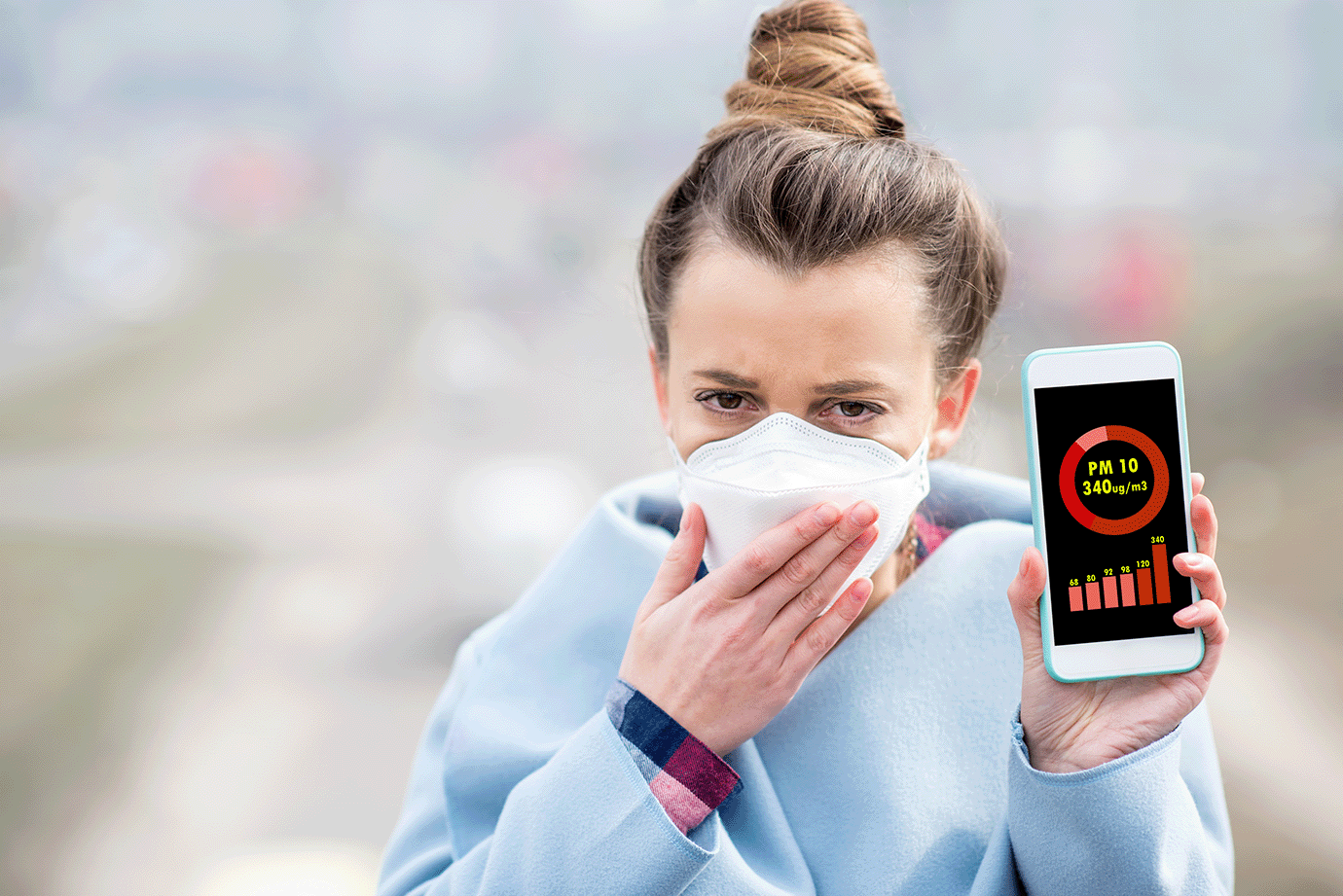
Monitor conditions daily. Download the UtahAir app or bookmark air.utah.gov. The DEQ issues Action Forecasts when pollution levels are expected to rise, giving you advance notice to plan accordingly. Follow @UtahDEQ on social media for real-time alerts.
Time your outdoor activities. Morning hours typically offer the best air quality, with pollution levels rising through the day. If you're a runner, cyclist, or outdoor enthusiast, early workouts are your friend during inversion season. On particularly bad days, consider moving exercise indoors entirely.
Invest in quality masks. N95 and KN95 masks filter out 95 percent of airborne particles larger than 0.3 microns—effective protection against PM2.5 when worn properly. Keep a supply in your car and bag during inversion season.
Upgrade your indoor air. HEPA air purifiers in bedrooms and main living spaces measurably reduce indoor particulate levels. Change HVAC filters regularly—consider upgrading to MERV 13 or higher rated filters. Keep windows and doors closed during poor air quality days, and avoid adding to indoor pollution by burning candles, using wood fireplaces, or running gas stoves without ventilation.
Stay hydrated. Adequate hydration helps your respiratory system function optimally and can ease irritation from pollutants.
Consider elevation. If your schedule allows, heading above the inversion layer offers a literal breath of fresh air. Many ski resorts sit above the gray ceiling, offering both recreation and respite.
The Bigger Picture
Individual protective measures matter, but so does collective action. Small choices add up: reducing vehicle trips, avoiding idling, using public transit when practical, and observing burn bans all contribute to cleaner air for everyone. Wood burning is prohibited during mandatory action days—report violations to the DEQ at (801) 536-4000.
The same BYU study estimated that air pollution costs Utah's economy roughly $1.9 billion annually in healthcare expenses, lost productivity, and related impacts. Meeting modest pollution reduction targets outlined in the Utah Roadmap to Clean Air could save $500 million per year by 2030.
Utah has made meaningful progress on air quality over the past two decades, even as population has grown. But our geography means this challenge won't disappear. The inversions will return each winter. What we can control is how we prepare for them—and how we protect ourselves and our families when they arrive.
RESOURCES
Real-time air quality: air.utah.gov
Mobile app: UtahAir (iOS and Android)
Report burn violations: (801) 536-4000 or deq.utah.gov complaint form
Social media alerts: @UtahDEQ