

UTAH FUN FACT: The 130-Year Battle Against “Smog Lake City”
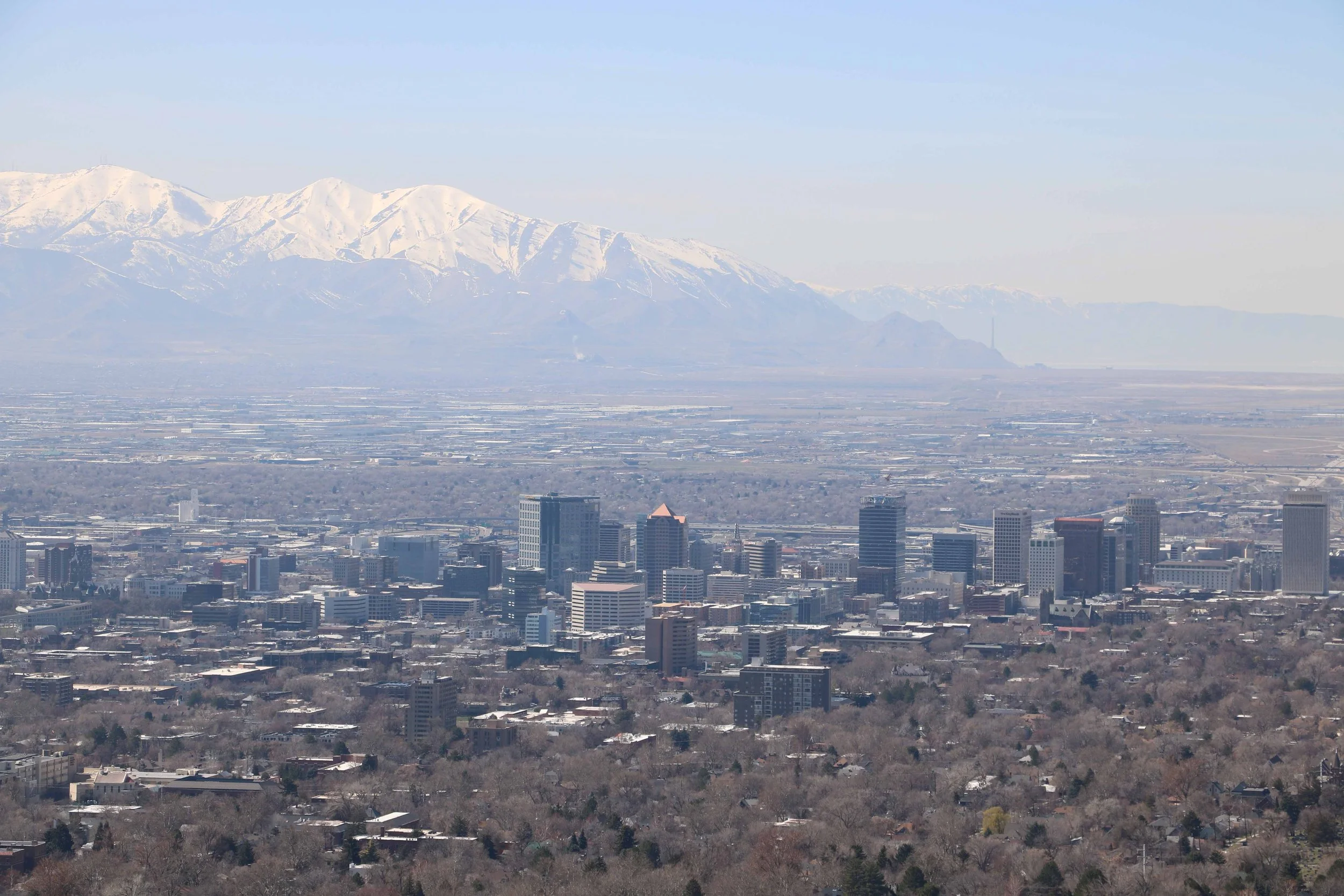
The health impacts are real. A BYU study found air pollution shortens the average Utahn’s life expectancy by two years and costs the state’s economy around $1.8 billion annually in healthcare costs, lost productivity, and tourism impacts. Emergency room visits for asthma jump 42% during severe pollution events. (The BYU study can be found at this link…)
– Weekly Utah Fun Facts by Mountain & Main Research Staff • Friday, January 16, 2026
If you’ve stepped outside this week and noticed the hazy gray blanket settling over the Wasatch Front, you’re experiencing Utah’s infamous winter inversion. But here’s something that might surprise you: Utahns have been complaining about this exact problem since before statehood.
The Bad News First
The Salt Lake Valley’s bowl-shaped geography creates a natural trap. The Wasatch Mountains, Oquirrh Mountains, and Traverse Mountain form a basin that holds cold air in place while warmer air settles on top like a lid. When pollutants get trapped underneath, we get those unhealthy air days that have earned Salt Lake City the unfortunate nickname “Smog Lake City.”
The health impacts are real. A BYU study found air pollution shortens the average Utahn’s life expectancy by two years and costs the state’s economy around $1.8 billion annually in healthcare costs, lost productivity, and tourism impacts. Emergency room visits for asthma jump 42% during severe pollution events.
Now for the Good News
Here’s what the data actually shows: despite adding over a million residents since the 1980s, our air quality has dramatically improved.
When PM2.5 monitoring began in the late 1990s, annual averages consistently stayed above 9.0 micrograms per cubic meter. From 2011 to 2023, levels dropped to almost always below that threshold, reaching as low as 6.454 in 2019. Compare winter 2000-2001 (29 days exceeding federal standards) to winter 2021-2022 (just 4 days).
The reason? Cleaner vehicles. Even though we have more people driving more miles than 30 years ago, modern cars emit far less pollution than their predecessors.
A Fight That Started Before Utah Was Utah
The real surprise is how long Utahns have been tackling this problem. In the 1880s, coal and wood smoke was so thick that residents had to clean soot from their walls with sponges. Salt Lake City passed its first air quality ordinance in 1891—five years before statehood—with fines of $5 to $50 per day for excessive smoke (when the average worker made just 14 cents per hour).
The first major air quality study in U.S. history was conducted right here between 1919 and 1926, a collaboration between Salt Lake City, the University of Utah, and the federal Bureau of Mines.
So when you’re checking the Air Quality Index on your phone during this week’s inversion, remember: you’re part of a 130-year tradition of Utahns who’ve looked up at that hazy sky and decided to do something about it.