

UTAH First in Almost Everything. Dead Last in One.
THE BEST STATE IN AMERICA HAS A DIRTY LITTLE SECRET
From the Editors of Mountain & Main
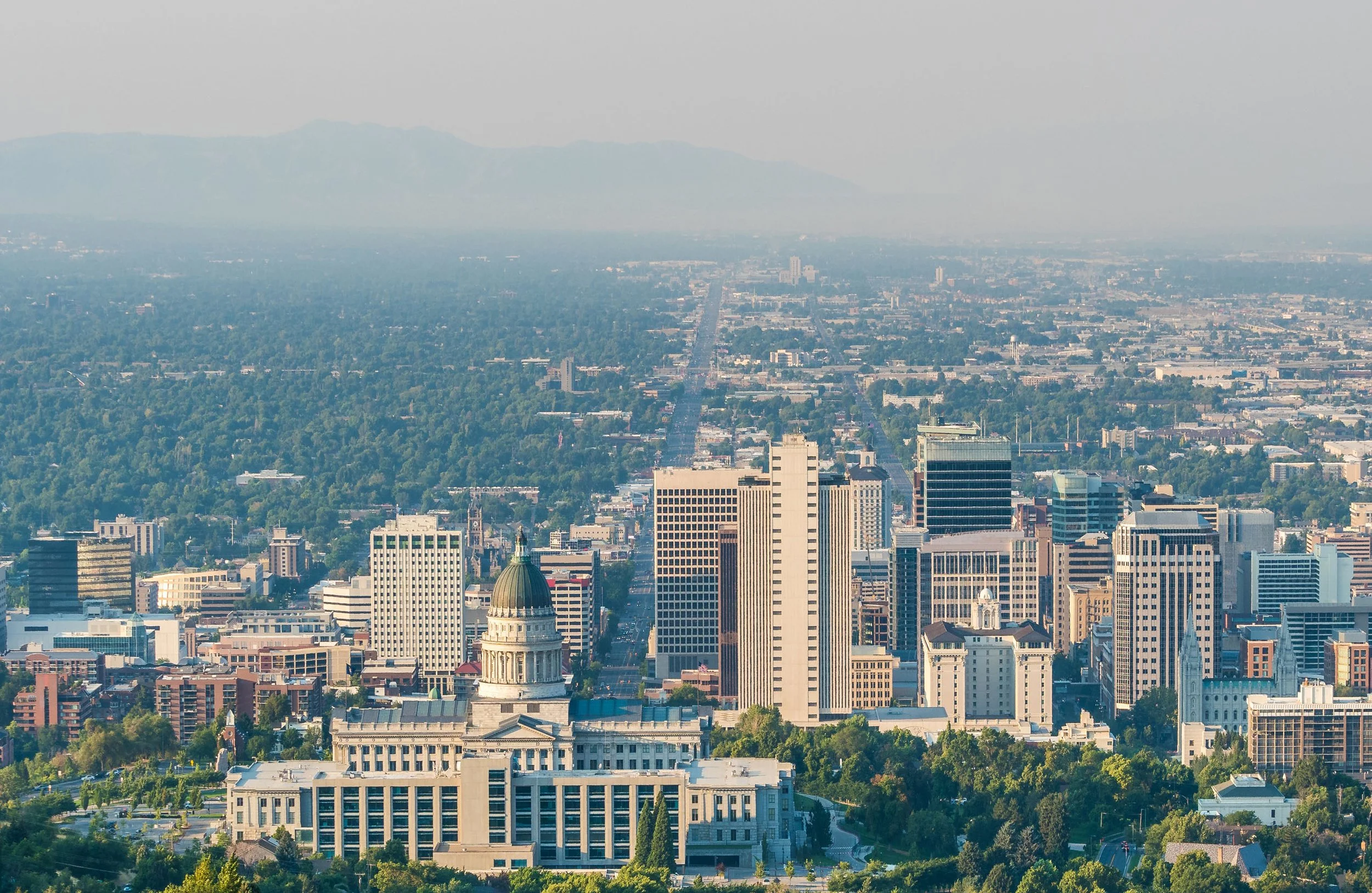
As spring arrives along the Wasatch Front, Utah is approaching a familiar moment. In May, U.S. News & World Report will release its annual Best States rankings — the most widely cited composite ranking in the country, measuring 71 metrics across eight categories including economy, healthcare, education, fiscal stability, and opportunity. For three consecutive years, Utah has sat at the top of that list. No other state has done it. The question this spring is whether the Beehive State will make it four.
That's just the beginning of the list.
WalletHub's 2026 happiness index places Utah second in the nation — and first in two categories that matter most to daily life: Work Environment and Community & Environment. Utah residents work hard, enjoy their work more than residents of any other state, and log fewer hours doing it. They volunteer at the highest rate in the country. They have the lowest divorce rate. They are, by most measures, genuinely content with where they live.
SmartAsset's January 2026 survey took a different angle — health — and arrived at the same destination. Utah ranked as the healthiest state in the nation, measured across ten indicators including obesity, substance use, sleep quality, smoking rates, heavy drinking, diabetes prevalence, and drug overdose deaths. Utah scored at or near the top in every category.
The unemployment rate tells the same story. Utah ties Nebraska for the lowest in the nation. Job growth remains among the strongest anywhere. The state's fiscal house is in order in a way that most states can only envy.
For the people who call the Wasatch Front home — from the tech corridors of Silicon Slopes to the family neighborhoods of Davis and Utah counties — none of this is entirely surprising. They feel it. They chose it. But seeing it quantified, year after year, across independent studies using different methodologies and different definitions of "quality of life," adds up to something more than coincidence.
Utah isn't winning these rankings by luck.
WHY IT WORKS
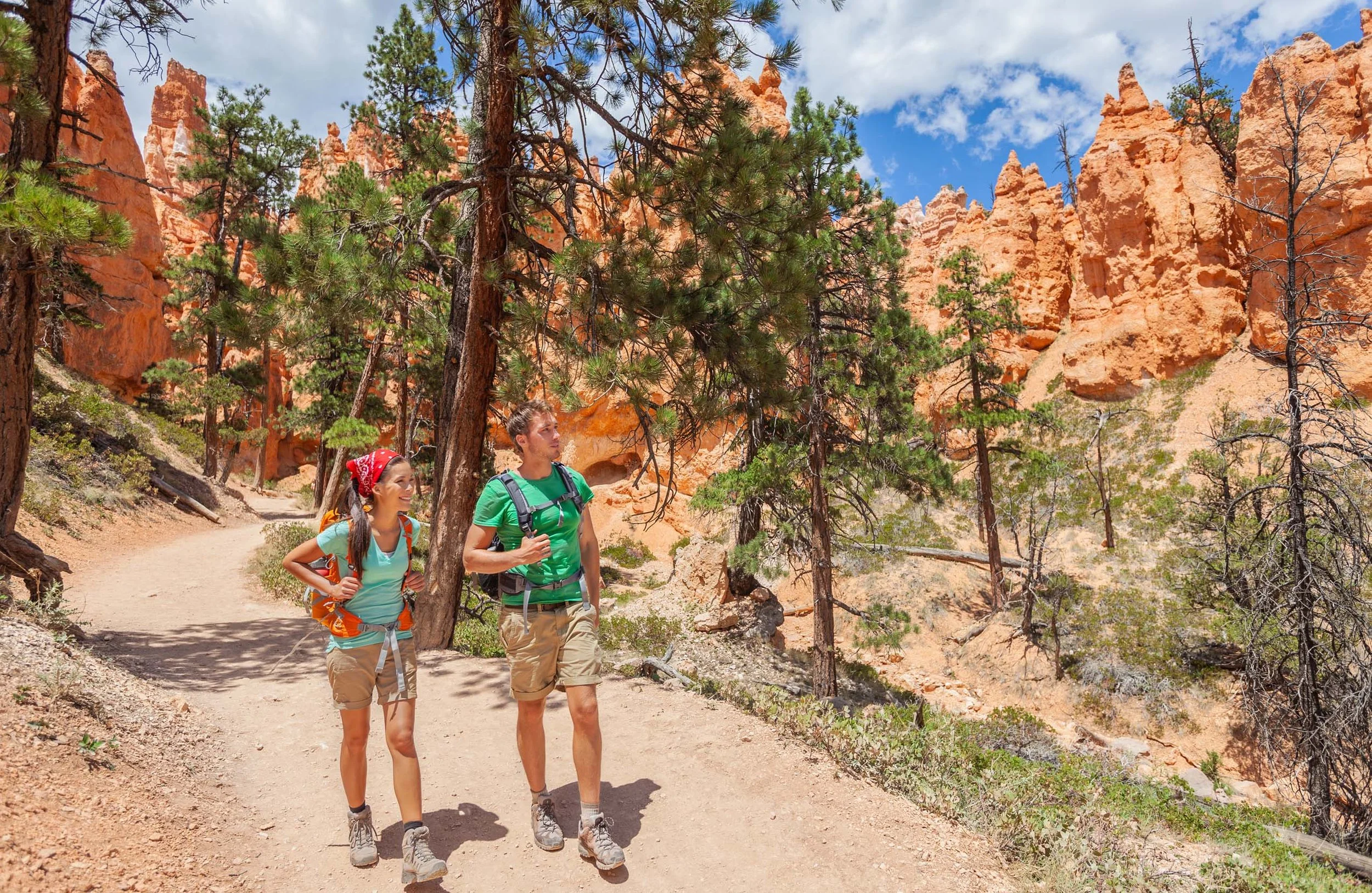
The outdoor recreation advantage Utah has is impossible to overstate. Young couple hiking Bryce Canyon trail. (Photos for this story are from Adobe Stock)
The lifestyle drivers behind Utah's dominance in quality-of-life rankings aren't complicated, but they are distinctive.
Utah is the youngest state in the nation. Its median age of 31.3 years — well below the national average — reflects a culture built around young families, community investment, and a long time horizon. When you have children, you tend to care about schools, safety, parks, and neighbors. Utah scores well in all of them.
The outdoor recreation advantage is impossible to overstate. Five national parks. World-class ski resorts within an hour of downtown Salt Lake City. Thousands of miles of trails. The natural landscape functions as infrastructure for physical and mental health — and the data bears that out in reduced obesity rates, lower depression numbers, and higher rates of adequate sleep compared to the national average.
Community cohesion rounds out the picture. The volunteer rate. The social capital. The neighbor-knows-neighbor texture of life in cities that haven't yet lost their human scale. These are the intangibles that don't show up on a spreadsheet but explain why the spreadsheet looks the way it does.
THE ONE NUMBER NOBODY BRAGS ABOUT
Here's where honesty requires a pause.
In the same 2025 U.S. News rankings that place Utah at #1 overall, the state finishes 48th in natural environment — specifically 48th in pollution and 28th in combined air and water quality. In a given year, Utah logs approximately 167 days of unhealthy air quality — against a national average of 143.
That's not a rounding error. That's more than five months out of the year when the air residents breathe falls below acceptable health standards.
The cause is well understood. The Wasatch Front sits in a geographic basin. In winter months, cold air traps pollutants — vehicle emissions, industrial output, wood-burning — beneath a warmer layer above, a phenomenon known as temperature inversion. The mountains that make Utah so visually stunning also make it, on certain days, one of the most polluted airsheds in the country.
For residents with respiratory conditions, for children, for the elderly, this is more than an inconvenience. It is a genuine public health challenge that sits in direct tension with every other quality-of-life achievement the state has earned.
This is the asterisk on the trophy.
WHAT'S BEING DONE — AND WHY 2034 MATTERS 🏅
The 2034 Winter Olympics, awarded to Salt Lake City, is often discussed in terms of economic impact and athletic legacy. Both matter. But there is a less-discussed dimension that may prove more consequential in the long run: the Games represent the most powerful forcing function Utah has ever had to confront its air quality problem head-on.
History offers a cautionary tale worth noting. When Beijing hosted the 2008 Summer Olympics, air pollution was the IOC's single biggest concern during the bidding process. China responded with what researchers called the largest air-cleaning effort in Olympic history — shutting factories, pulling half the city's cars off the road, spending an estimated $10 billion on emergency measures. It worked, for a window. Studies confirmed the improvements were real. They were also temporary. Within a year after the closing ceremony, roughly 60 percent of the air quality gains had already reversed. China had cleaned the air for the world's cameras. It took another five years — and a separate national policy commitment in 2013 — before lasting structural improvement began.
Utah and Salt Lake City are openly aware of that precedent, and the stated intention is different. Salt Lake City has set a 2040 deadline for reducing greenhouse gas emissions and improving air quality — a timeline that extends well beyond the Games themselves. Utah's Olympic bid committed to hosting a "climate-positive" Games, with legacy goals built into the language of the agreement rather than treated as a post-Games afterthought. The Utah Department of Environmental Quality is pursuing new emissions standards for oil and gas operations — part of a broader state effort to make clean air improvements that outlast the Games.
Whether the commitment holds is the open question. The architecture of the plan points toward permanence. The political will to execute it is still being tested. What's clear is that the 2034 deadline — nine years out — is long enough to build something real, and visible enough that the world will notice if Utah doesn't.
Olympic host cities operate under international scrutiny. The eyes of the world will be on Salt Lake City for the Games and the years leading up to them. That scrutiny creates political will that ordinary civic advocacy rarely generates. Utah has the opportunity to write a different ending than Beijing did in 2008 — not just clean air for a fortnight, but clean air as the permanent standard. The mountains that create the inversion problem are also the reason the world is coming. The question is whether Utah treats 2034 as a deadline or a legacy.
THE BIGGER PICTURE
The rankings will keep coming. Utah will likely continue to sit near or at the top of most of them. The economy is strong, the families are here, the mountains are extraordinary, and the community fabric that holds it all together has been built over generations.
But the best version of this state — the version worth passing to the next generation — is one where the air matches the ambition.
Utah is #1 in America at almost everything that matters. The work isn't done. The opportunity is real. And the people who live here have proven, repeatedly, that when they decide to do something, they do it well.
The air quality problem is solvable.
Watch this state solve it.
Data sources: U.S. News & World Report Best States 2025; WalletHub Happiest States 2026; SmartAsset Healthiest States 2026; This article was produced with AI assistance and reviewed for editorial accuracy.