

The Mayor Next Door
Five years ago, Lorin Palmer was a stay-at-home dad and a youth soccer coach. Today he’s in his second term as mayor of Herriman — and he still wants to have lunch with you on Wednesday.
Herriman Mayor Lorin Palmer has a problem his kids tried to solve years ago. He can’t stop meeting people.
A trip through a drive-through can turn into a five-minute conversation with whoever is working the window. A family vacation becomes a string of new acquaintances. Eventually his children laid down the law: two new people a day, Dad. Two.
“They just got sick of it,” Palmer says, laughing, “because I’m not afraid to talk to people at all and make a new relationship, anywhere.” Does he follow the rule? “Not very often.”
It’s a small family joke, but it explains a lot about how a man who had no interest in politics six years ago ended up running one of the fastest-changing cities on the Wasatch Front — and why, in November 2025, Herriman voters sent him back for a second four-year term.
From Business Major to Planning Commission
Palmer grew up the oldest of six in what he calls a very humble family. There wasn’t money set aside for college, and there wasn’t anyone steering him toward a particular career.
After serving a mission for The Church of Jesus Christ of Latter-day Saints, he took a job largely because it offered tuition reimbursement — as long as he studied something business-related. “Well, then I became a business major,” he says. “It was almost chosen for me.”
He fell in love with it anyway: first with the numbers, then with sales. He spent years managing successful industrial retail stores, but he always wanted to be out meeting customers rather than waiting for them at the counter. That instinct for relationships turned out to be his best political training.
“To me, good politics at this level is just relationships,” he says. “That’s where my sales background came in.”
His entry into civic life came the way it does for many residents: a development. A large project proposed on Herriman’s west side worried him — its size, its scope and the traffic it would add to roads that were already strained. He got involved and pushed back. Then he decided that wasn’t enough.
“You can’t make noise and then not be part of the solution,” he says. He joined the city’s planning commission, and when the mayor’s seat opened up, friends told him he had a knack for this. He threw his name in, not knowing how it would turn out.
There is, he notes, no school for mayors. “There’s no classes,” Palmer says. “It’s literally a four-hour class on how not to end up in jail.” The rest he learned by leaning on the city’s professional staff and doing what he’s always done — building relationships.
Lessons From Uruguay
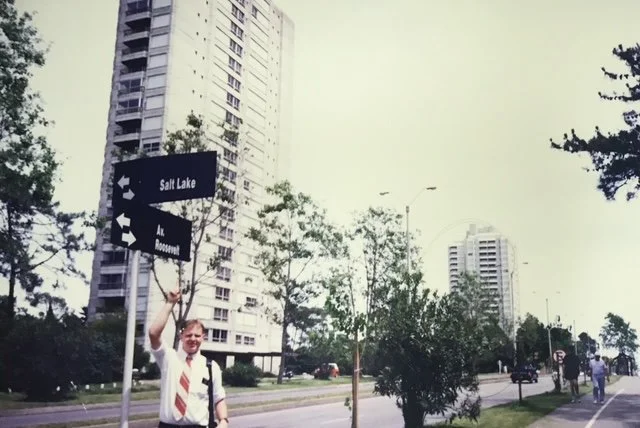
Palmer served his mission in Uruguay, and it still shows up in his daily life. He speaks Spanish every day.
But the bigger lesson, he says, came from his companions. Missionaries are paired with a new partner every so often, each with his own personality and quirks, and you have to find a way to make it work. “I’m sure I had my quirks to them,” he admits.
Mostly, he remembers the people. “I’d get stuck in people’s houses,” he says. “I loved the people. And I knew then my career was going to be around people.”
Herriman at the Table
Today that people-first approach plays out in boardrooms. Palmer says that when he took office, Herriman often wasn’t part of the regional conversations about infrastructure and business. Now, he says, “Herriman’s at the table in every single discussion” — and he gives his city council equal credit for building those relationships.
The results are starting to show. Target and Trader Joe’s have both been announced for Herriman, arriving around the same time a challenger in last year’s election was arguing the city needed commercial growth faster. Palmer says the public often doesn’t see how long that work takes: the city had been working on Target for three years.
More is in the pipeline. A large commercial center is planned within the Olympia development on the city’s west side — a residential project approved before Palmer’s time that he’s now trying to make the best of. He can’t name names yet, but he’s hoping for a major grocer, and he expects it to be about three years out.
And yes, there’s a friendly rivalry with neighboring Bluffdale. Palmer says he gets along with every mayor in the county, but cities compete for the same businesses. Herriman had been planning an indoor entertainment venue until Bluffdale landed Fat Cats. “When we announce something, they get a little jealous,” he says, “and the same thing when they announce stuff.”
Where AI Fits — and Where It Doesn’t
Ask Palmer about artificial intelligence and his line is clear: anything that faces residents needs a human touch.
The city is already using AI in a few behind-the-scenes ways. Herriman’s website now has an AI chat tool that helps visitors find answers faster. The police department uses AI to help with report writing, letting officers dictate and transcribe instead of spending 45 minutes or more typing up a report after a call. “That gets our officers back out,” he says. He likes that officers still have to review and verify every report.
Next up may be plan review in the planning department, where much of the work is tedious and repetitive — but only with guardrails. The city is also waiting for the state to finish its policy on how cities should use AI before going further. “We don’t want to change what we’re doing” once the state weighs in, he says.
For Herriman’s small business owners, though, Palmer sees AI as a real opportunity. Land and rent are expensive in the city, and most small businesses can’t afford a marketing department. Used well, he says, AI can help a one-person shop get its name out on social media until it’s big enough to hire that full-time marketing person. He’d like to see training made available so local owners know what’s possible.
At home, his son — an aspiring author — uses ChatGPT to research ideas and to help bring his own drawings to life as illustrations. Palmer’s wife, who works in accounting, uses AI regularly for answers and presentations.
As a dad and longtime youth coach, his worry is the same one many parents share. “Anytime there’s something good out there, it can be used for the bad too,” he says. Like the early days of the internet, it’s something we’ll have to learn to use the right way.
“We’re Just Normal People”
The part of his story Palmer says rarely gets told is that he wasn’t a rising political star. He was a stay-at-home dad and a soccer coach while his wife supported the family. “Now she supports my political habit,” he jokes.
That matters to him, especially when he visits schools and students look at city leaders like they’re somebody special. “Five years ago I was just a dad,” he says. “All of us are just normal people stepping into this world.”
“Five years ago I was just a dad.”— Herriman Mayor Lorin Palmer
He says the same about his council. Nobody is there chasing a bigger title; they live in Herriman, drive the same roads and run into the same neighbors. “If you’re frustrated about something, I guarantee we are too,” he says. “We’re just in the seats now that we can try to do something about it.”
Council meetings tend to be quiet, which Palmer takes as a sign residents are mostly happy. But he wants more people to get involved — and eventually, to step up and serve. “We won’t be here forever,” he says.
Lunch on Wednesdays
If you want to talk to the mayor, you don’t need an appointment. You couldn’t make one at his office anyway — he doesn’t have one. City Hall has outgrown its space, and the mayor gave up the room.
What he has instead is lunch.
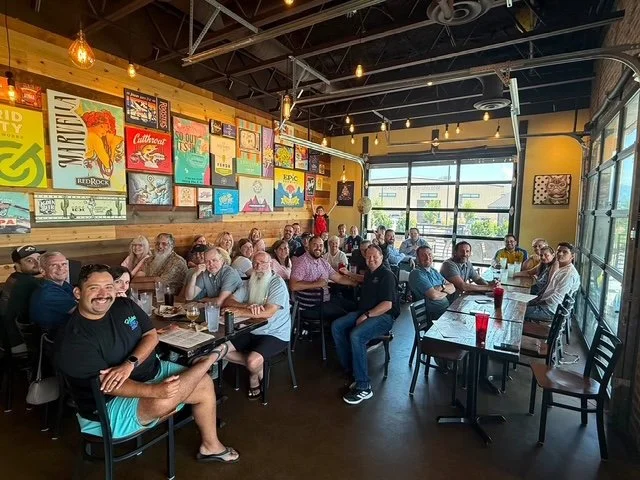
Every Wednesday at noon, Palmer hosts the Herriman Work From Home Lunch, rotating through a different local restaurant each week. He started it about five years ago, before he was mayor, when he was home with his youngest and missing adult conversation. A few work-from-home neighbors joined him. It has since grown into a weekly, informal meet-the-mayor gathering — and, he says, “25 of my closest friends.”
The rules are simple. Everyone buys their own lunch (“I don’t buy anybody’s lunch,” he says with a grin), and you don’t have to buy anything if you just want to talk. You don’t have to work from home, either. Retirees, young people, men and women all show up.
“Anybody’s welcome,” Palmer says. “I make myself available every Wednesday.”
His kids might say that’s cheating on the two-new-people rule. Herriman is probably glad he never followed it. ■
This article was prepared with the help of AI tools and reviewed by Mountain & Main editors.
Your Guide to Life Along the Wasatch Front
Mayor Palmer says good community comes down to relationships. We agree. Mountain & Main is a free magazine, delivered to driveways across the Wasatch Front, and a website for the people, places and events that make this place home. Read about the neighbors shaping your city, find the best things to do this week, and meet the local businesses that keep the magazine free. Where community meets commerce.