

Singer-Songwriter Kenedi Anderson on Chasing Joy
By Treyton T | Photos: Camera Shy Photography

Utah singer–songwriter Kenedi Anderson has wanted one thing since second grade. Getting close to it taught her she’d been chasing the wrong part.
Kenedi Anderson is a singer–songwriter. After all, it’s what she’s always wanted to be and what she’s always wanted to be known for. She has the attention and following and her voice just filled Dodger Stadium with the National Anthem. But what any of it means to her now is what separates her from the Kenedi that once chased these same things in the name of something else: fame, recognition. The pursuit of these things is messy, and as Kenedi puts it, coming to terms with who she is has been funny, cool, and frustrating all at once. Such is life. Such simple terms. Now, Kenedi is guided by another simple term, something new to chase: joy––the foundation of the person and singer-songwriter she’s always been.
Her earliest memories and melodies found their way onto a small recorder gifted to her by her grandfather when she was seven. Kenedi reaffirms, “I cannot remember a time in my life when I didn’t want to be a singer.” From an early age, it was her source of understanding. Even as a child, she transformed ordinary arguments, unreasonable timeouts, crushes at school, and innocent frustrations into music. In 2nd grade, when asked what she wanted to be when she grows up, she replied, “A singer!” Her friend suggested they be realistic, but to Kenedi, the dream wasn’t merely realistic, but certain. In fact, this was no dream. Those are often irrational. This was real. This was her.
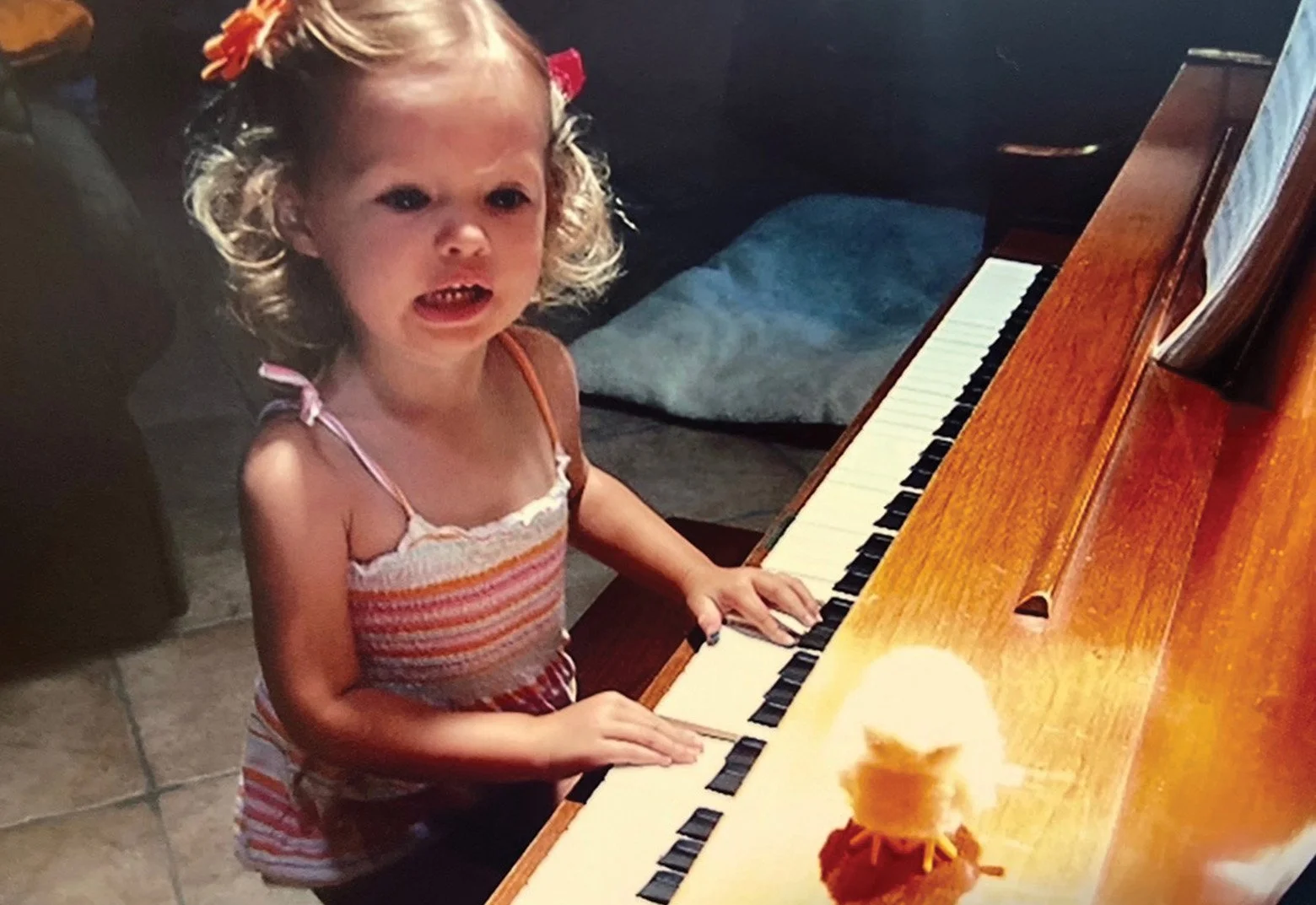








She began singing the national anthem early. Around the time she received the recorder, she sang it with her younger sister, Rubee, at a Nicholls State baseball game. She’d go on to sing it at University of Virginia basketball games, at BYU games among other major universities. She attributes these performances to the building of her confidence and the development of her voice.
There’s an innocence to the tone of these situations. They’re unaccompanied by the need for success or respect; just a girl loving what she does and doing it all the time. There’s joy in that, and looking back, maybe more than wanting to be a singer, what Kenedi really wanted was to merely sing, to write songs and to simply sing them.
As she grew older, singing slowly became a means for success, and with each passing day, that reality came further into light. She was good. Very good. Her following was growing rapidly and virality was building, offering an artifact of credibility. Numbers don’t lie, and if numbers equal success, you can absolutely measure it. For better or for worse. Before long, success became a moving target of sorts. “I never felt good enough,” she tells us. It got to a point where she felt her happiness was postponed until the next goal was achieved, the next number hit. Eventually, these endeavors and their results influenced her worth. But having goals isn’t the problem, she reminds us, it’s punishing yourself for failing to control the things you’re unable to, for chasing something fleeting.
Amidst all the things she figured would fulfill her fell a question: If music is who she is, what happens when she feels she’s fallen short? Who is she then? Kenedi tells us that, for some time, singing, writing, and performing were the things that, beyond making her feel whole, made her feel useful, and in moments where she found herself caught up in the idea of who she was without them, she felt damaged. Separating herself from the music was an almost existential fear. So, she separated herself from it.
“No talent or gift that God gives us is meant to be just a selfish pursuit. Everything is meant to be developed so that we can help each other.”
–Kenedi Anderson
When the idea of serving a mission for the Church of Jesus Christ of Latter-day Saints presented itself to her, it was awfully confusing. It was never something she desired to do. Yet, amidst twisting herself artistically in all the ways she thought she was meant to be, the feeling persisted, persisted, persisted. She questioned it, fought it, and as months went by, her attempts to ignore its pressure failed. After countless tears and violent wrestling with what was one of the most difficult decisions she’d ever made in her life, she yielded. She told her older sister, Dakota, before anyone else. At the time, Dakota was serving a mission in Texas and was tasked with keeping the secret from their parents. “I’m not sure yet,” Kenedi told her, “and I don’t want mom and dad to get their hopes up before I’ve officially decided.” What Kenedi wanted was advice, and her sister offered that wonderfully. When she did finally decide to tell her family, they didn’t react with some unwavering excitement and an accompanying feeling that their child had been saved, but with acceptance and a deep trust in their daughter and sister to make the right decision for herself. They’d love her either way. They’d support her no matter what. When she decided to go, they did exactly that.

While away she found a certain peace in the isolation and a comfort in not being pushed towards a persona that was unrepresentative of who she was. While she figured the mission would be all about serving others (which it certainly was) for Kenedi, it equally served her. She once again felt allowed to confront questions about herself and her own identity. What do I like? What do I stand for? What if she wasn’t merely a singer? What if songwriting was not who she was, but a vessel? Success was no longer defined by the number of people who knew her and her songs, but by her relationship with God and the people she held closest to her heart.
Now, home from her mission, Kenedi, the singer-songwriter, but more importantly, the sister, the daughter, and the child of God, is nobody but herself. She uses music without letting it use her. There’s a remarkably bright future ahead of those who operate through that simple term, joy, and as she continues to chase it, through all that’s funny, cool, and frustrating, she does so as the fullest version of herself, and we cannot wait to see what comes from that.
WHAT COMES NEXT FOR KENEDI ANDERSON

Kenedi says original music is the target by the year’s end. (Photo by Camera Shy Photography, Lehi, Utah)
She is twenty-two, she is home in Utah, and there is no record deal yet.
For anyone who has been following her since she was seventeen, that lands strangely. It shouldn’t. Anderson has a publishing company she loves, an agency and agents she rates highly, a lawyer and a business manager — real pieces of a real operation. What she does not have is management, which she says has to come first, and a producer she loves and trusts, and who feels the same about her. Money is its own factor. So is patience: she wants to build something people can hold onto before she starts putting material into the world.
The label question she is in no hurry to answer. She could stay independent indefinitely, she says, until signing becomes genuinely necessary rather than merely available.
In the meantime there is the work. She commutes to Los Angeles when she can get studio time. The rest of it happens at home, five or six hours a day, writing and recording and practicing — guitar, piano, and now ukulele. She is a musician in constant pursuit of growth, and the instruments are not there for accompaniment. She wants to sit down alone with one of them and make a room feel something.
Original music is the target by year’s end, though she is candid that the timing is not entirely hers to control.
“I am doing everything that I can to try and speed the process up, but I’m also learning to try to find joy in the process and in the journey — that even if that part is a little bit out of reach for me right now, I can still enjoy the part of the journey that I’m in right now.”
Have Courage, Be Humble
We asked Kenedi Anderson what she would say to a twelve-year-old girl who wants to do what she does. This is her answer, lightly edited.
My motto since I was probably seventeen — because that’s when I made my first big-girl decision all on my own — has been to have courage. It’s kind of just been this constant reminder to myself that I’m brave, and that I can do the things that people say can’t be done.
And coming along with that, I would follow it up with: be humble.
Because if you can do those things, and you understand that you’re good enough to achieve all of the dreams that you have — which you are — you also have to understand that you cannot do it alone. You have to have the support of your friends and family. And you have to understand that you need support from something bigger than yourself. For me, that’s God.
Believe in yourself. Understand that you can have joy in the journey and in the process of becoming the person you want to become. Have the courage to do the things you need to do to get there. Don’t lose yourself in the process, and stay humble.