

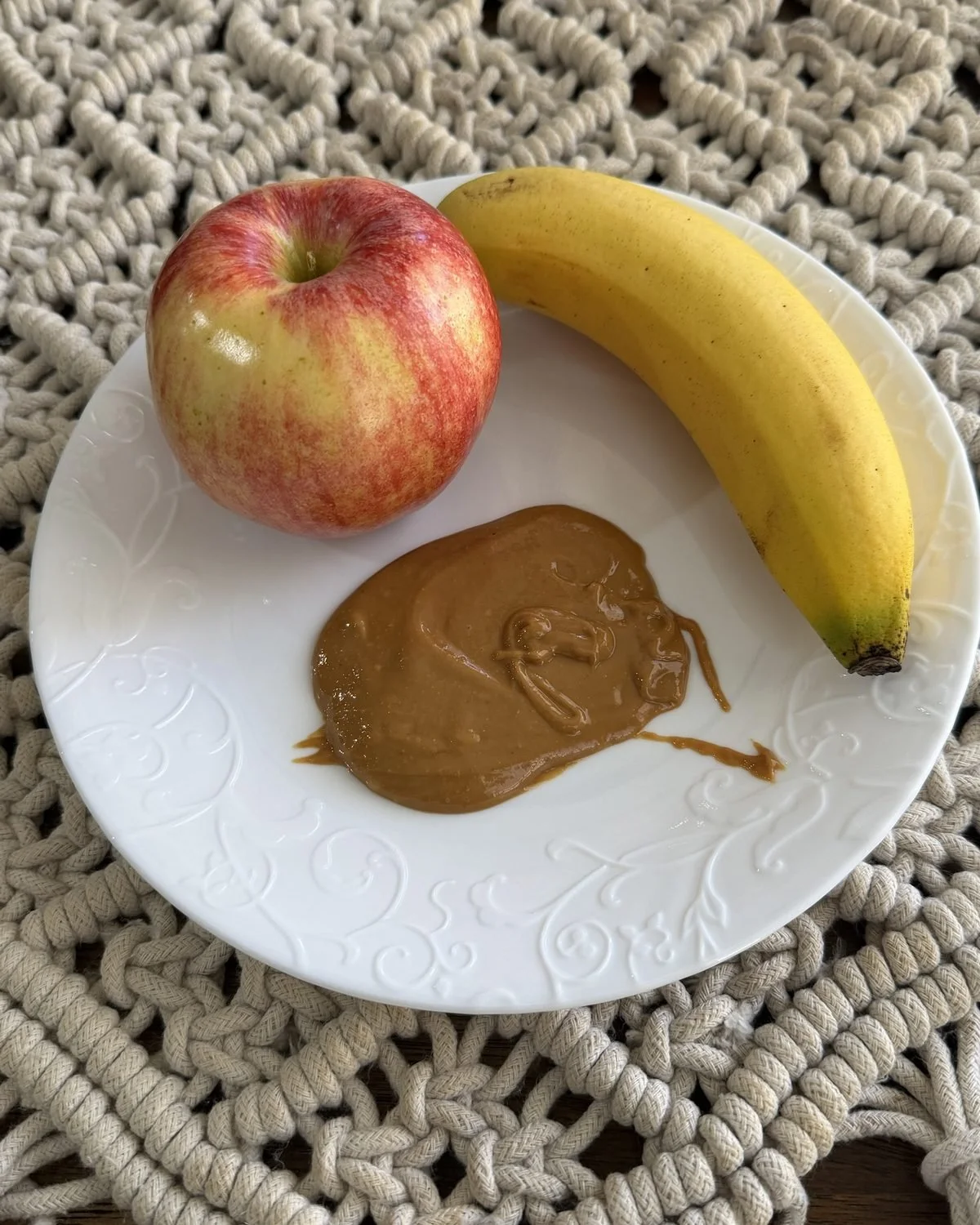
A spoonful of the right peanut butter can carry you to dinner and quiet a sweet tooth. Here's what decades of research say, and how to pick a jar that delivers.
It's 3 p.m. Lunch is a memory, dinner is hours away, and the vending machine is calling. Or it's 9 p.m., and something sweet sounds like the only reasonable way to end the day.
Before you reach for the cookies, consider the jar in the pantry. A spoonful of peanut butter is one of the simplest whole-food answers to between-meal hunger and the sweet tooth, and decades of research back it up. The catch is that not every jar delivers the same benefits, and the spoon you use matters more than you'd think.
Why a spoonful holds you over
Peanut butter combines three things that slow digestion: fat, protein and fiber. Instead of the quick spike and crash you get from crackers or candy, it releases energy gradually and keeps hunger quiet for a couple of hours.
Researchers at Purdue University, led by nutrition professor Richard Mattes, have studied this for more than two decades. In one of their early studies, hunger stayed down about two and a half hours after a peanut or peanut butter snack, compared with about half an hour after rice cakes (Just Food).
In another Purdue study, people added 500 calories of peanuts to their day with no instructions to cut back. They reported feeling full and naturally ate less at other times, offsetting most of the extra calories (FoodNavigator). A later trial with Brazil's Federal University of Viçosa found peanut butter at breakfast raised a fullness hormone and kept the desire to eat lower for hours, while also blunting the blood sugar rise after lunch (Nutrition Insight).
A fair note: some peanut research receives support from industry groups such as The Peanut Institute. The Purdue findings line up with large independent studies, though, which consistently show nut eaters don't gain more weight than people who skip nuts.
Taming the sweet tooth
Peanut butter isn't sweet, yet its rich, salty, roasted flavor often satisfies the same craving. When you do want real sweetness, pair it with something that brings fiber or flavor, not just sugar:
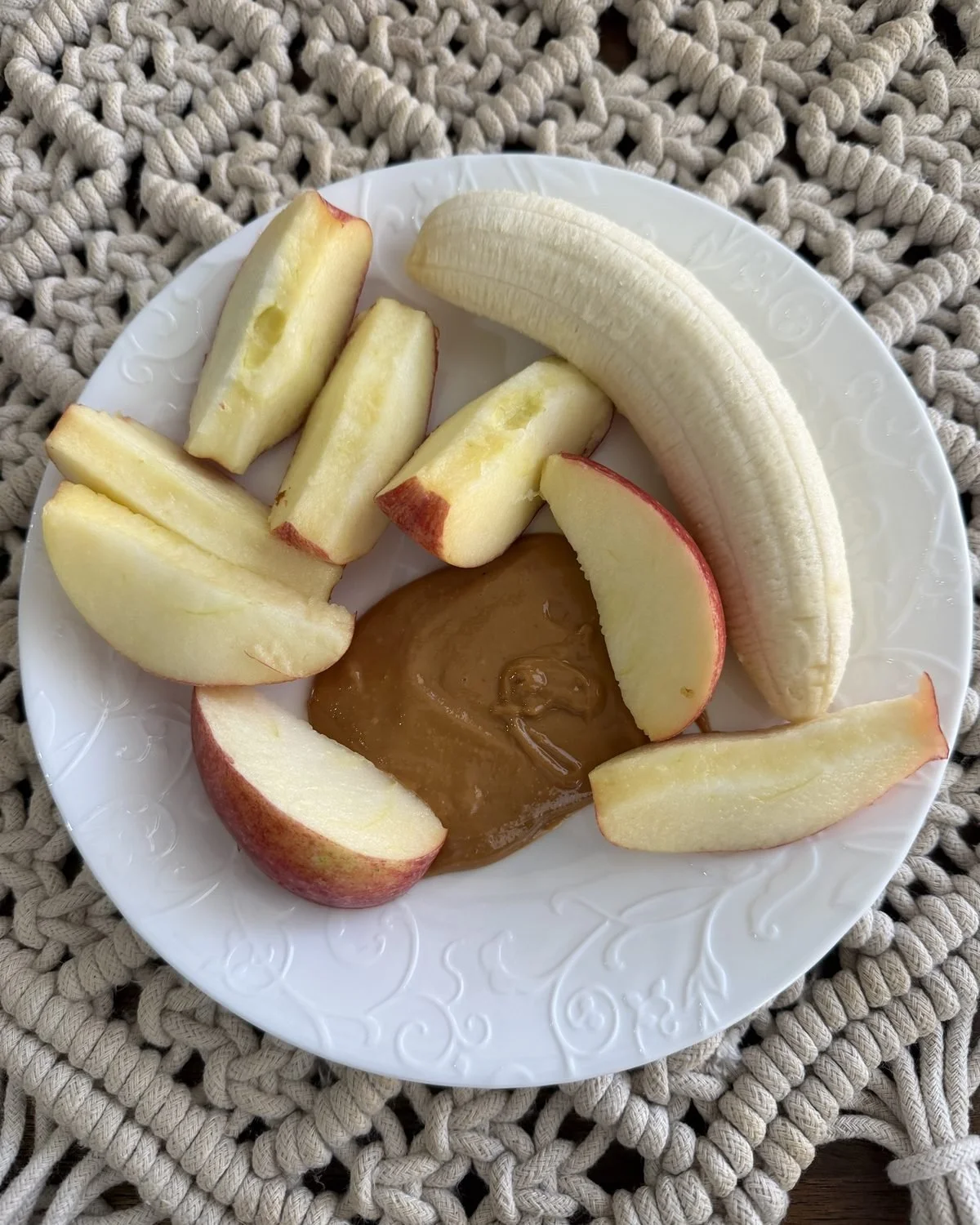
- Apple slices. Crisp, tart and full of fiber that slows the sugar.
- Banana. Dip it, or slice it onto toast. Natural sweetness plus potassium.
- Dark chocolate, 70% or higher. The percentage on the wrapper is how much of the bar comes from the cocoa bean; the rest is mostly sugar. At 70%, you get more of cocoa's beneficial flavanols and far less sugar than milk chocolate, which is often only 10% to 40% cacao. A square dipped in peanut butter tastes like a candy bar for a fraction of the sugar.
- The classic PB&J. Use whole-grain bread and a low-sugar jam, and it becomes a respectable mini-meal.
Tip: For dipping, warm a scoop in a small microwave-safe bowl for 10 to 15 seconds, then stir. It coats fruit better, and a few seconds of heat doesn't harm the nutrients. Warm only what you'll eat. Don't microwave the plastic jar itself, and don't reheat the same peanut butter over and over: repeated warming and cooling speeds up how fast the oils go rancid.
What the long-term studies show
The strongest evidence comes from large studies that followed tens of thousands of people for years.
- Lower diabetes risk. Harvard researchers followed nearly 84,000 women in the Nurses' Health Study for 16 years. Those who ate peanut butter five or more times a week had about 21% lower risk of type 2 diabetes than those who rarely ate it, after accounting for weight, exercise, smoking and family history (JAMA, 2002). Nut eaters in the study did not gain more weight.
- Longer life, healthier heart. Regular nut and peanut eaters show lower rates of heart disease and death from all causes across American, European and Asian studies. A Dutch study of more than 120,000 adults linked as little as 10 to 15 grams of nuts or peanuts a day, about half a handful, to lower death rates from heart disease, cancer, diabetes and respiratory disease (International Journal of Epidemiology, 2015).
The important caveat: That same Dutch study found whole peanuts helped, but peanut butter did not. The researchers pointed to what commercial peanut butter often adds, such as salt, vegetable oils and, at the time, trans fats (Medical Xpress). The lesson isn't to give up peanut butter. It's to buy a jar that's as close to plain peanuts as possible.
These are observational studies, so they show strong links, not proof that peanut butter itself causes the benefits.
What's in a spoonful
Approximate values for natural peanut butter (peanuts and salt):
| 1 level tablespoon | 2 tablespoons (standard serving) | |
|---|---|---|
| Calories | about 95 | about 190 |
| Fat | 8 g | 16 g (mostly unsaturated, about 3 g saturated) |
| Protein | 3.5–4 g | 7–8 g |
| Carbohydrates | 3.5 g | 7 g |
| Fiber | 1–1.5 g | 2–3 g |
| Sugar | under 1.5 g | 1–3 g |
Peanut butter is also a good source of niacin (vitamin B3, about a quarter of your daily need per serving), vitamin E and magnesium. It adds vitamin B6, manganese, phosphorus and potassium, along with smaller amounts of plant antioxidants such as resveratrol, the compound found in red wine.
How to pick a healthy jar
Turn the jar around and read the ingredients. The best list is one word, peanuts, or two: peanuts, salt. A layer of oil on top is a good sign that nothing was added to stop it from separating. Fresh-grind machines at many grocery stores are another great option.
What to skip, and why:
- Added sugar, molasses or corn syrup. These add empty calories and work against the steady blood sugar that makes peanut butter a good snack.
- Hydrogenated oils. Many big-name "regular" brands use them so the oil never separates. Trans fats are now largely gone from the U.S. food supply, but these jars still add saturated fat and usually sugar.
- Palm oil. Common in "natural, no-stir" versions. It's better than hydrogenated oil but still adds saturated fat plain peanuts don't have.
- "Reduced fat" peanut butter. It swaps the healthy fat for sugar and fillers. The fat is the part you want.
- Heavy salt. Lightly salted is fine. Unsalted is better if you watch your blood pressure.
Healthy vs. not: side by side
Swipe the table sideways to see all four types →
| Natural | Natural "no-stir" | Regular brands | Reduced fat | |
|---|---|---|---|---|
| Typical ingredients | Peanuts, salt | Peanuts, sugar, palm oil, salt | Peanuts, sugar, hydrogenated oils, salt | Peanuts, corn syrup solids, sugar, added protein, hydrogenated oils, salt |
| Added sugar | None | Yes | Yes | Yes, often the most |
| Extra saturated fat | None | From palm oil | From hydrogenated oils | From hydrogenated oils |
| Oil separates? | Yes, stir once | No | No | No |
| Unopened | A few months | About 6–12 months | 6 months–2 years | 6 months–2 years |
| Opened, pantry | About 1 month | About 2–3 months | 2–3 months | 2–3 months |
| Opened, fridge | 3–6 months | About 6 months | 6 months or more | 6 months or more |
| Verdict | Best choice | OK in a pinch | Skip | Skip |
Shelf life is approximate. Always check the best-by date on the jar.
Read the label: four jars from a Utah grocery shelf
We picked up four familiar jars and turned them around. The front of the jar sells you; the ingredient list tells you what's inside.
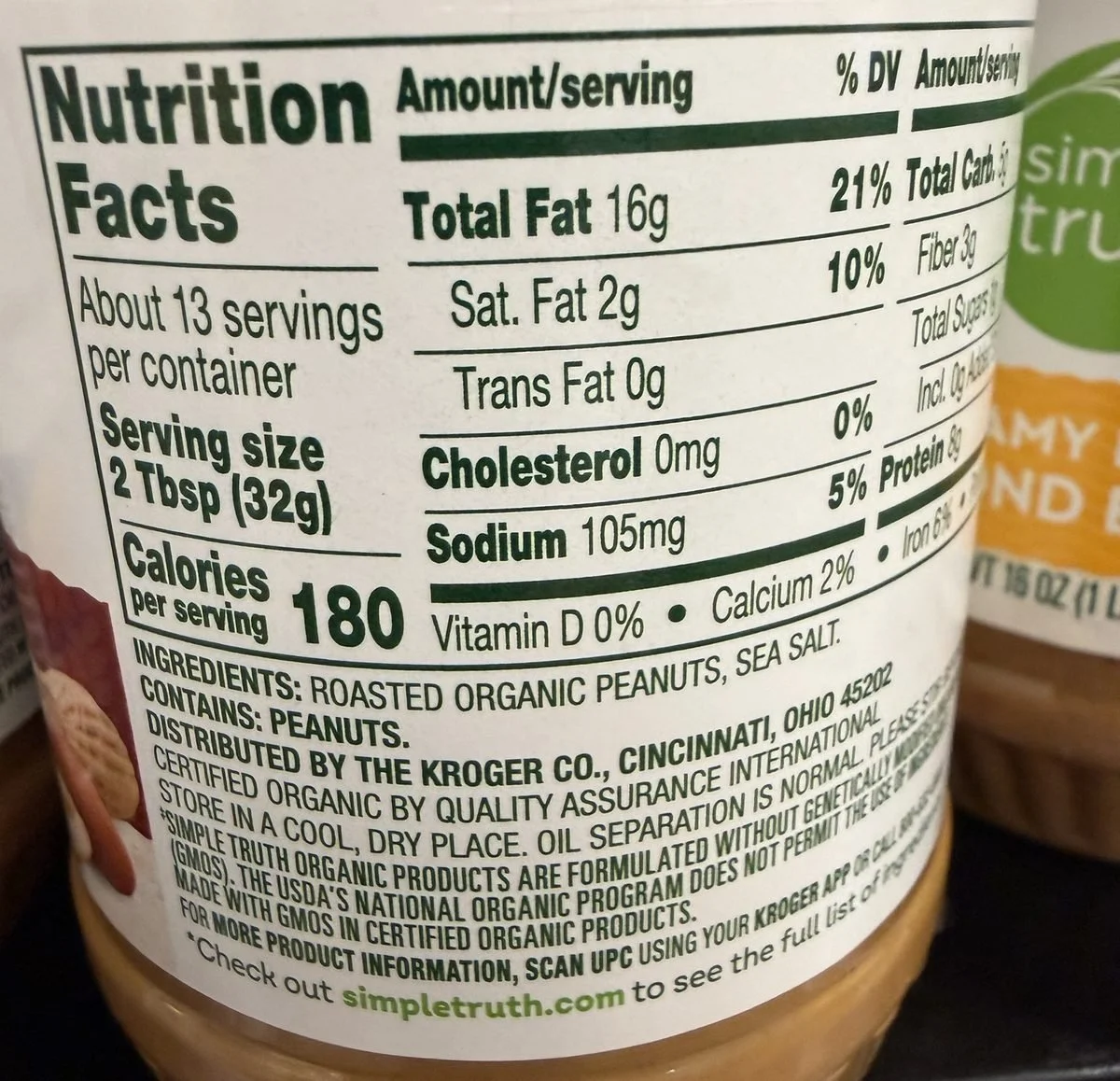
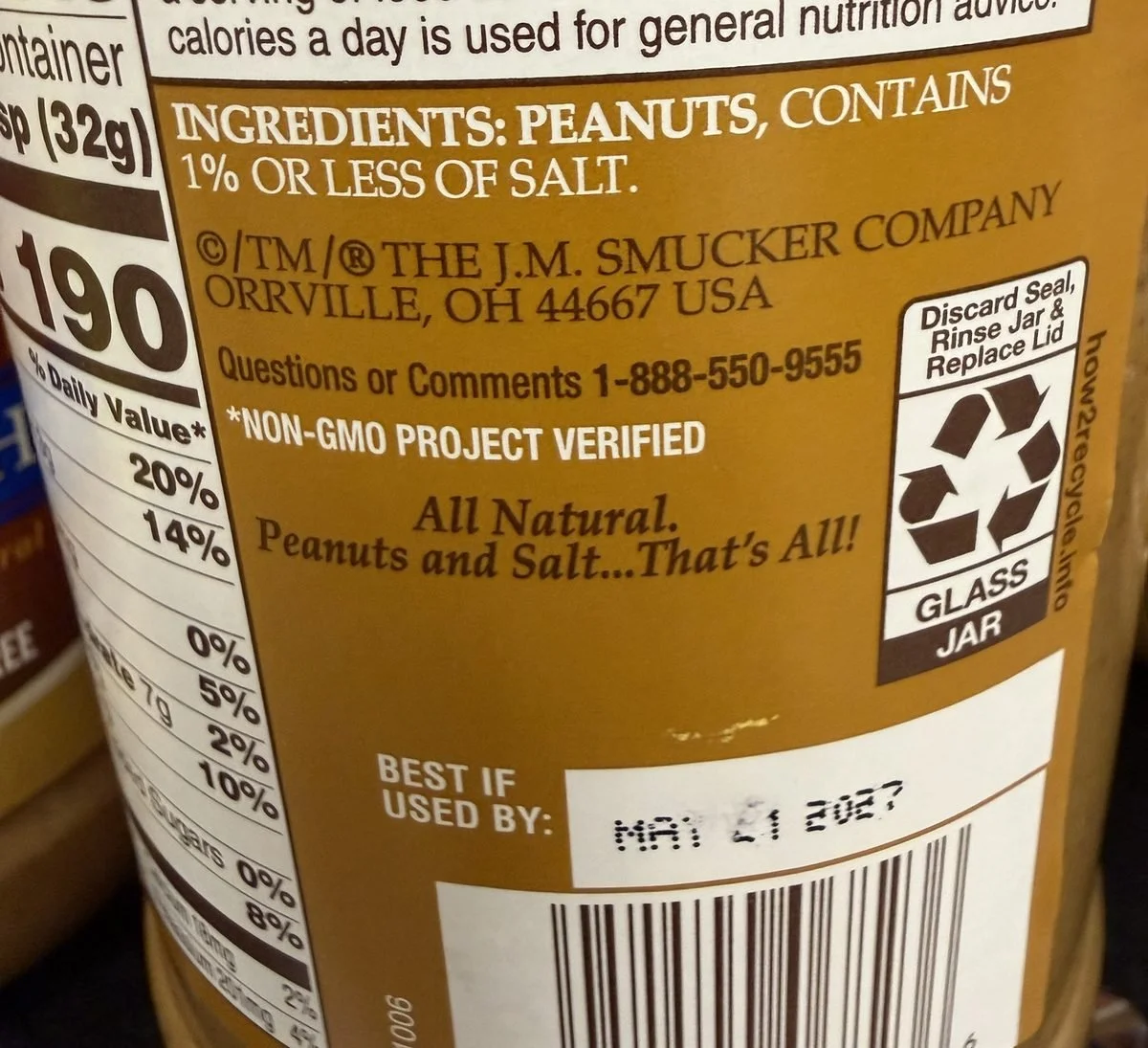
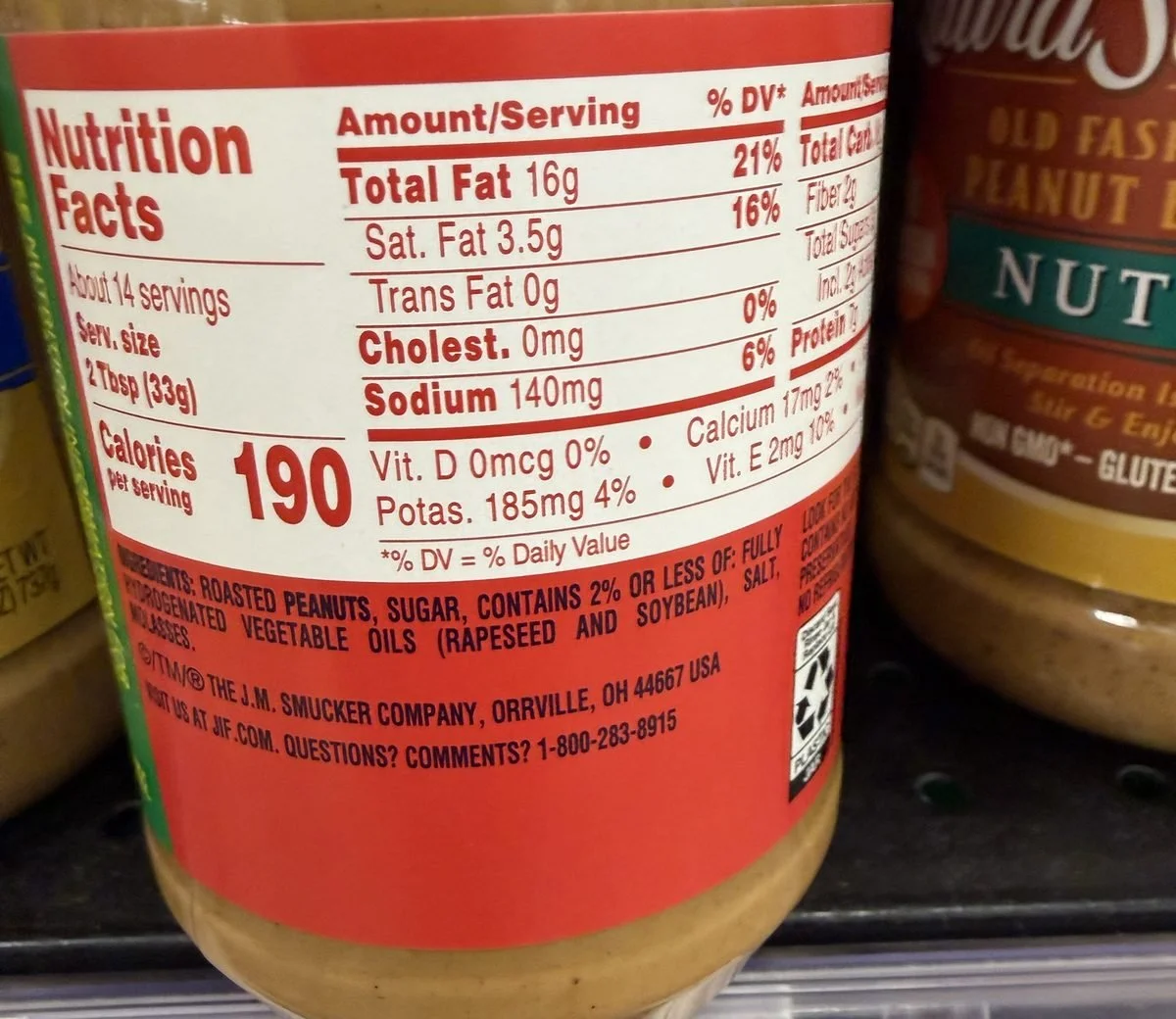
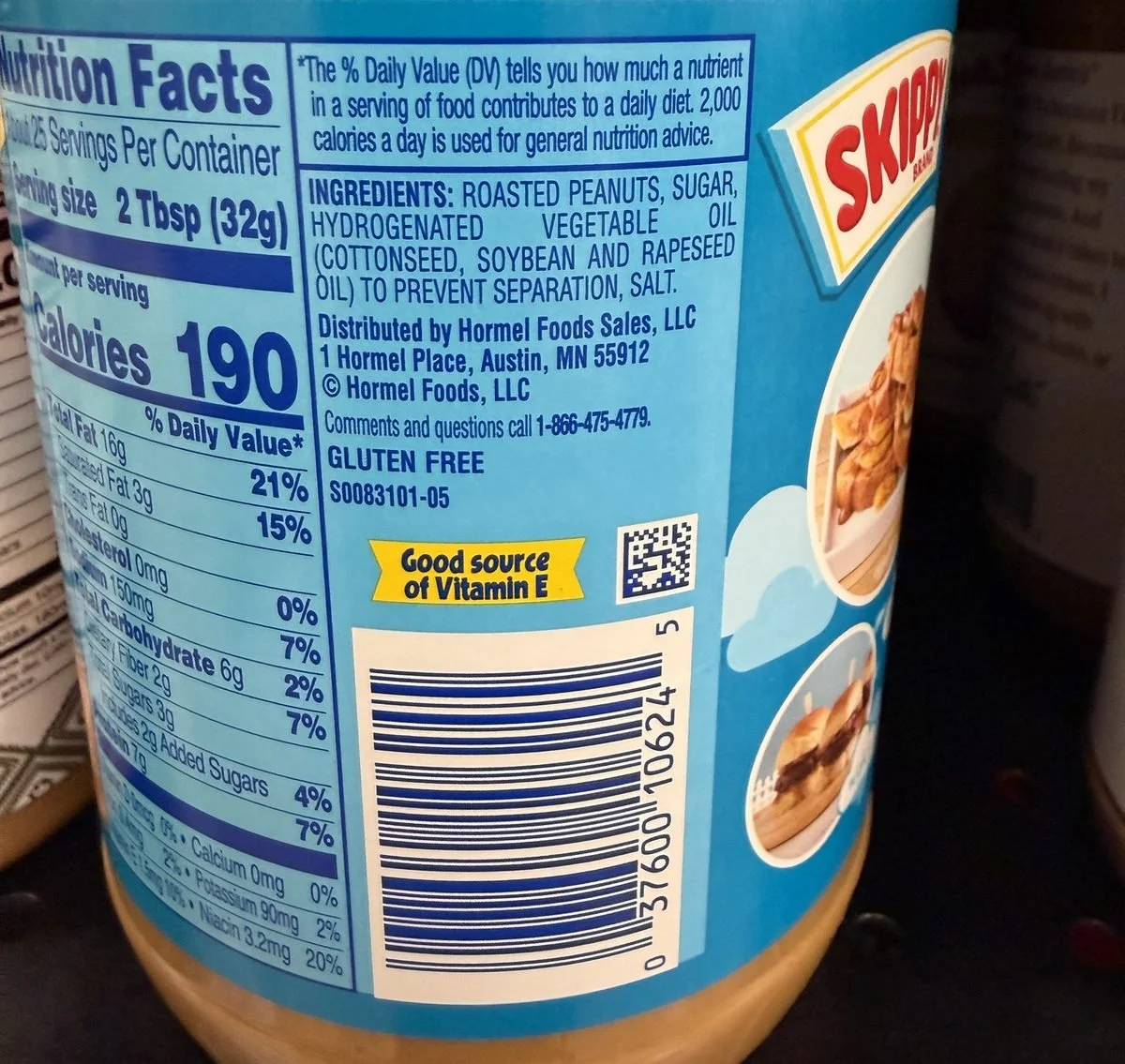
Jars photographed by Mountain & Main at a Utah grocery store in November 2026. Recipes change, so check the label on the jar you buy.
Keeping it fresh
Without stabilizers, natural peanut butter goes rancid sooner than the big brands. The jars we checked tell the story: the natural Laura Scudder's was good for about six months, while Jif's date was nearly two years away.
Stir a new jar well once, then keep it in the fridge. That stops the oil from separating again and slows spoilage. Cold peanut butter is stiff, so keep a small container in the pantry for everyday use and refill it each week, or set out a scoop 10 to 15 minutes before you need it.
You'll know it has turned if it smells sharp, like old paint or crayons, or tastes bitter. Toss it at that point.
The bottom line: mind the spoon
A level tablespoon is about 95 calories. A heaping spoonful straight from the jar is often two tablespoons or more, closer to 200. Measure a level tablespoon once so you know what it looks like.
Used that way, once or twice a day, a spoonful of plain peanut butter is one of the smartest snacks in the kitchen. It carries you to dinner, quiets the sweet tooth, and keeps you company with apples, bananas and a square of good dark chocolate along the way.
Sources
- Jiang R, et al. "Nut and Peanut Butter Consumption and Risk of Type 2 Diabetes in Women." JAMA, 2002
- van den Brandt PA, Schouten LJ. "Relationship of tree nut, peanut and peanut butter intake with total and cause-specific mortality." International Journal of Epidemiology, 2015
- Nuts and peanuts may protect against major causes of death, Medical Xpress, 2015
- Shed the pounds, eat peanuts, FoodNavigator, 2002 (Purdue University study)
- Peanuts and peanut butter curb hunger, Just Food (Purdue University study)
- Study shows peanuts keep satisfying hunger for longer, Nutrition Insight (Purdue University and Federal University of Viçosa)
AI assisted in the research and drafting of this article.