

The Humble Russet
An affordable whole food that punches well above its weight — if you cook it right.
Section: Well & Whole
Walk into any Wasatch Front grocery store and you'll find few foods cheaper, pound for pound, than russet potatoes. Five-pound bags routinely under $4. Ten-pound bags during winter sales for $5 or less. In an era when "eating whole" can feel like a luxury reserved for those with $200-a-week produce budgets, the russet is a quiet rebuttal: a genuinely nutrient-dense whole food at commodity pricing.
It's also one of the most misunderstood items in the produce aisle.
For two decades, low-carb culture has filed potatoes under starches to avoid. That framing collapses pretty quickly under a closer look at what's actually in a russet — and at how the cooking method, far more than the potato itself, determines whether it ends up working for or against you.
What's actually in a russet
A medium russet, eaten with the skin on, delivers roughly:
160 calories
4 grams of protein (modest, but real)
4 grams of fiber, most of it in the skin
900 milligrams of potassium — more than a banana, and well above what most American diets supply
About 30% of daily vitamin C
Useful amounts of vitamin B6, magnesium, and niacin
The skin is not optional in any of this. Most of the fiber, a meaningful share of the potassium, and several B vitamins concentrate in or just under the peel. Peeling a potato isn't a small loss — it removes a real chunk of what you came for.
The cooking question
The most common worry — fair, because it's true of plenty of vegetables — is that cooking strips out the nutrients you wanted in the first place. With potatoes, that's only partially correct.
Heat does break down vitamin C, the most fragile nutrient in the potato. And water-soluble nutrients (vitamin C, B vitamins, some minerals) leach into cooking water if the potato is cubed and boiled. But the rest of the profile — fiber, protein, potassium, magnesium, resistant starch — holds up well across nearly any cooking method.
Cooking ranked roughly from best to worst for nutrient retention:
Baked with the skin on. The skin acts as a barrier; nutrients have nowhere to leach. Vitamin C losses around 10–20%.
Microwaved whole. Short cook time, minimal water, surprisingly high retention.
Roasted or air-fried. Some vitamin C loss to heat, but minerals stay put.
Boiled in the skin. Better than cubed — the skin still does protective work.
Boiled peeled and cubed. The biggest loss — up to half the vitamin C and a meaningful share of potassium end up in the water.
That last point comes with a footnote: don't pour the water down the drain. It's a clean, lightly starchy stock that lifts the texture of bread, gravies, and soups. Treat it the way an Italian grandmother treats pasta water.
The resistant starch trick
Here's where potatoes get genuinely interesting.
When you cook a potato and then cool it — even just overnight in the refrigerator — a portion of its starch undergoes a process called retrogradation, restructuring into what nutrition researchers call resistant starch. Resistant starch isn't digested in the small intestine the way regular starch is. It travels to the colon, where it feeds beneficial gut bacteria and produces short-chain fatty acids linked to better metabolic and gut health.
Reheating does not undo the conversion. A cold potato salad — or a baked potato refrigerated overnight and warmed for breakfast — has a meaningfully lower glycemic impact than the same potato eaten fresh out of the oven.
For Utahns who batch-cook, this is good news: a Sunday tray of baked potatoes pulled from the fridge through the week is, if anything, working harder for your gut than the fresh-baked version.
Five preparations that don't sabotage the math
The reason potatoes get a bad reputation isn't the potato. It's what tends to land on top of one.
Baked whole. Pierce, rub lightly with olive oil, bake at 425°F for about an hour. Top with Greek yogurt and chives instead of sour cream and butter — same creamy mouthfeel, more protein, less saturated fat.
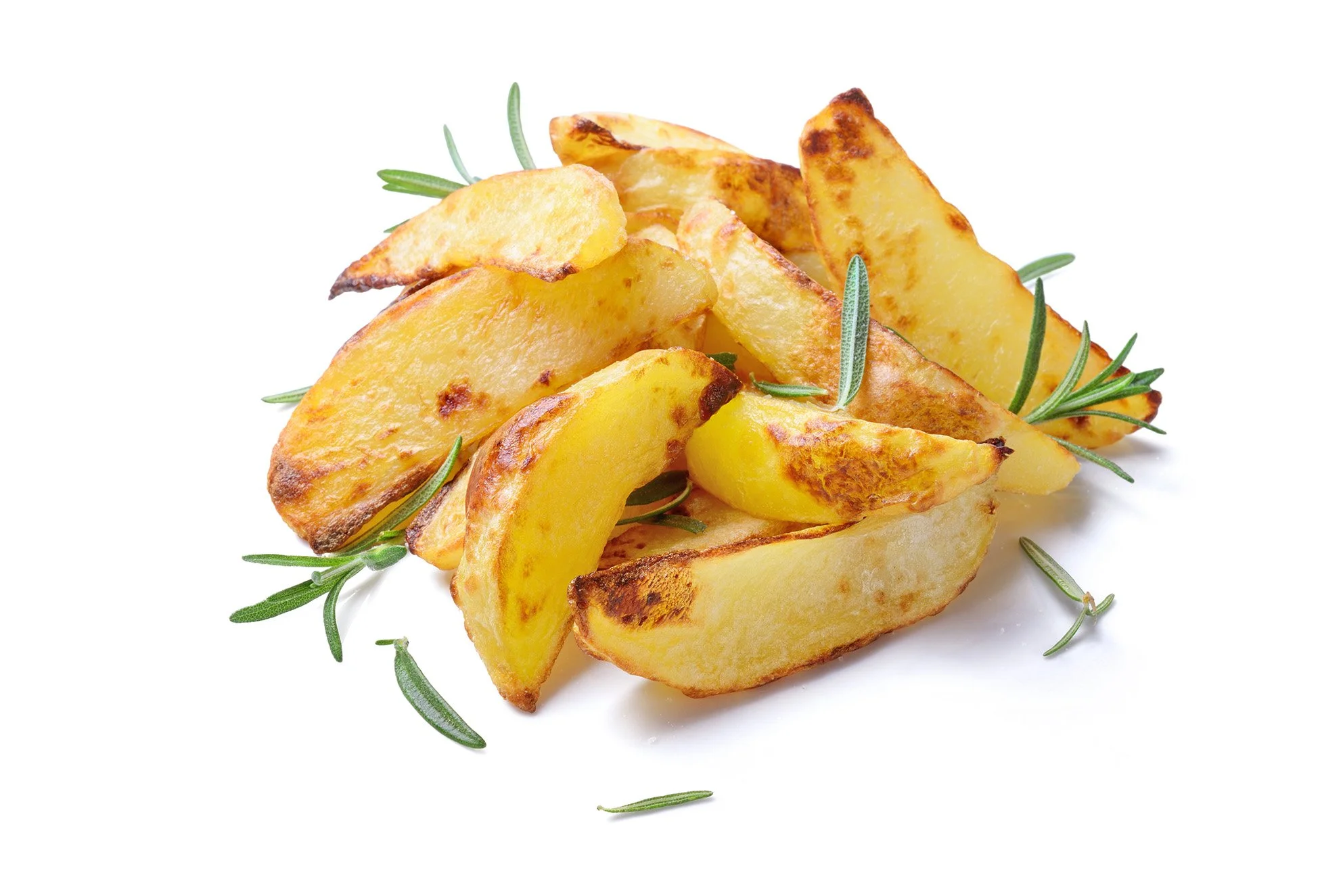
Roasted Potato Wedges
Cut into eighths, toss with a tablespoon of olive oil and herbs (rosemary holds up best at high heat), roast at 425°F for 30–35 minutes, turning once.
Roasted wedges. Cut into eighths, toss with a tablespoon of olive oil and herbs (rosemary holds up best at high heat), roast at 425°F for 30–35 minutes, turning once.
Smashed and dressed. Boil whole in the skin until fork-tender, smash with the side of a knife, dress with garlic, olive oil, lemon, and flaky salt. Creamy without cream.
Air-fried fries. Cut into batons, soak in cold water 20 minutes to pull surface starch, dry thoroughly, toss with a teaspoon of oil, air-fry at 400°F until crisp.
Cold potato salad. Boil whole in the skin, cool, dice, dress with olive oil and mustard rather than mayonnaise. The cooling earns you the resistant starch bonus.
The garden angle
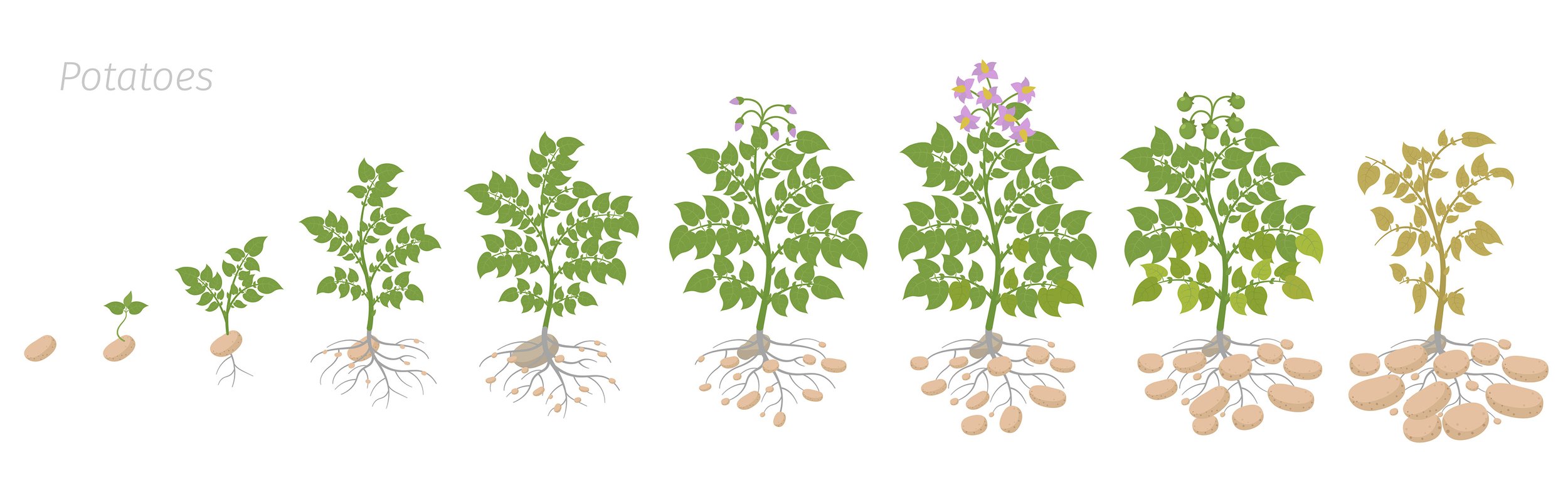
Cedar City, Cache Valley, and most of the Wasatch Front are well-suited to growing potatoes — they tolerate cooler nights, don't mind clay soils once amended, and store for months in a cold garage. A simple potato tower, a column of stacked tires, wood, or wire cage filled with straw and soil, can yield 15 to 20 pounds from a single seed potato. For families looking to stretch the produce budget further, few crops return more food per square foot.
Whatever the variety — russet, Yukon Gold, fingerling, red — the same cooking principles apply. Skin on. Don't drown them. And if you've got leftovers in the fridge, you've got a quiet metabolic upgrade waiting for tomorrow.