

How to Help Without Saying the Wrong Thing
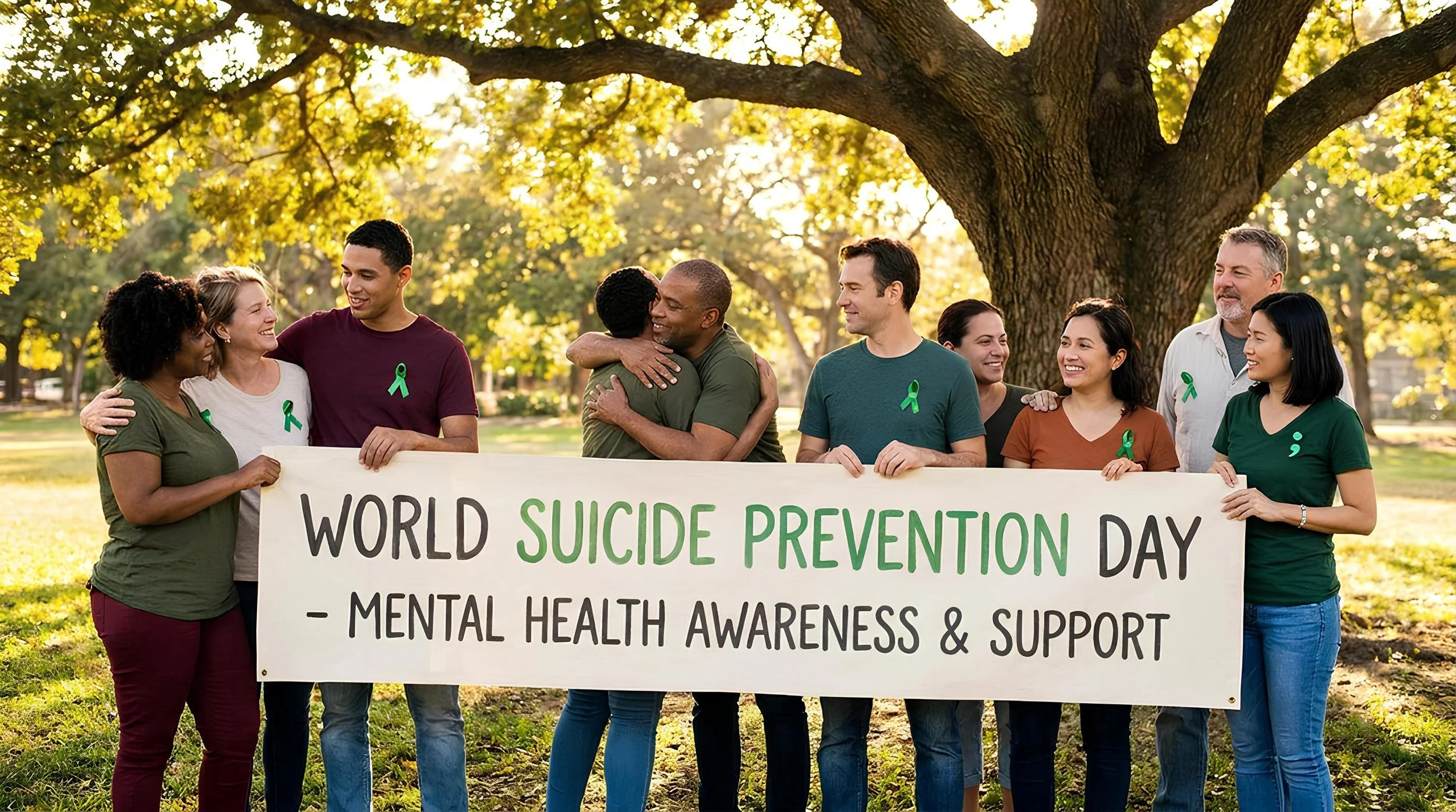
September 10 is World Suicide Prevention Day, and all of September is recognized as Suicide Prevention Awareness Month.
When someone you love says they don’t want to be here anymore, you don’t need the perfect words. You need to know what to do next.
There are conversations none of us feel prepared to have. A friend says, “Everyone would be better off without me.” Your teenager says, “I don’t want to be here anymore.” Your brother, who has been struggling for months, suddenly tells you he’s done trying. In that moment, it can be hard to know what to say, whether to ask directly about suicide or whether you’re overreacting.
Our instinct is to find exactly the right words to make the pain disappear. But that isn’t the job. The job is to take them seriously, stay connected and help them get to the next safe place.
In Utah, knowing how to do that matters. Utah Department of Health and Human Services data show that from 2021 through 2023, an average of 685 Utahns died by suicide each year. In 2023, suicide was the second-leading cause of death among Utahns ages 10–17, 18–24 and 25–44. Behind every statistic are conversations happening at kitchen tables, in cars, after midnight and over text messages. Here is what ordinary people can do when one of those conversations happens to them.
Ask the Question You’re Afraid to Ask
Someone you care about has been talking about feeling hopeless. You want to ask what they mean, but another thought immediately follows: what if asking about suicide puts the idea in their head?
That fear is understandable, but research summarized by the National Institute of Mental Health has found that asking someone directly about suicide does not increase suicidal thoughts or behavior. NIMH recommends asking clearly and directly: “Are you thinking about suicide?”
Questions like “You’re not thinking about doing something stupid, are you?” signal the answer you want to hear. A direct question gives the person permission to answer honestly. Then comes the harder part: being prepared for them to say yes.
Don’t Rush to Fix It
When someone admits they are experiencing suicidal thoughts, our instinct may be to convince them they shouldn’t feel that way: “But you have so much to live for.” “Think about your kids.”
Those responses come from love, but someone in overwhelming emotional pain may not need an argument about why they shouldn’t feel the way they feel. They need someone willing to hear what they are actually saying. NIMH recommends listening without judgment and acknowledging the person’s thoughts and feelings. Simple responses can be more helpful: “I’m really glad you told me.” “I’m here with you.” “We’re going to get through the next part together.”
It can also be tempting to decide whether someone “really means it” — especially when a concerning statement is immediately followed by, “I’m kidding.” Do not make yourself responsible for deciding whether someone is serious enough to deserve help. Utah’s Violence and Injury Prevention Program advises taking any warning sign or threat of suicide seriously.
When It Becomes an Emergency
There is an important difference between supporting someone in emotional distress and trying to manage an immediate suicide crisis by yourself. If someone appears to be in imminent danger or has already harmed themselves, treat the situation as an emergency and call 911.
Do not leave them alone while you try to determine the perfect next move. NIMH also recommends helping reduce access to highly lethal means or dangerous locations when that can be done safely, and connecting the person with crisis or professional support. In Utah, that connection can begin with a call or text to 988, which routes Utah callers to the Utah Crisis Line and can dispatch a mobile crisis outreach team in person.
Getting emergency help is not a betrayal of someone’s trust when you reasonably believe their life may be in danger. Safety has to come first.
When Your Child Says, “I Don’t Want to Be Here”
Few statements can frighten a parent more, and the first reaction matters. Responding with, “You have a great life,” or, “You don’t mean that,” may shut down the very conversation you need them to continue having.
Instead, put the phone away, sit with them and ask directly, “When you say you don’t want to be here, do you mean you don’t want to be alive?” If the answer is yes, or even “I don’t know,” keep listening and ask, “Are you thinking about suicide?”
Asking directly does not plant the idea in a child’s mind. The goal is not to interrogate them or force them to reassure you. A parent may feel terrified internally while responding calmly with, “Thank you for telling me. You aren’t in trouble. I’m taking this seriously because I love you, and we’re going to get you some help.”
Then follow through. A disclosure involving suicide deserves professional evaluation rather than simply hoping the feelings will be gone tomorrow.
Don’t Promise to Keep It Secret
Someone may ask you not to tell anyone. A teenager may say, “Please don’t tell my parents.” An adult may say, “If you call anyone, I’ll never speak to you again.”
You can respect someone’s privacy without agreeing to secrecy when safety may be at risk. A response such as, “I care about you too much to promise I’ll keep something secret if I think you’re in danger, but I’ll stay with you while we figure out who we need to involve,” is both honest and supportive.
After the Crisis Passes
One of the most overlooked parts of suicide prevention happens after the immediate crisis ends. Everyone exhales, life becomes busy again and there can be a temptation to assume the danger has passed.
Follow-up still matters. NIMH includes ongoing supportive contact among its recommended suicide-prevention actions. Send a text saying, “Thinking about you today.” Bring dinner. Offer a ride to an appointment. Ask again next week. And don’t be afraid to use the word suicide again — asking, “How have the suicidal thoughts been this week?” communicates that you remember and that the person does not need to pretend everything is fine around you.
Supporting someone does not mean assuming sole responsibility for keeping another person alive. That is too much for one friend, spouse, sibling or parent to carry. Helping effectively often means bringing more people into the circle rather than trying to become the whole circle yourself.
You Don’t Need Perfect Words
Most of us will never feel completely prepared for this conversation, and that is okay. What matters is enough courage to notice, enough courage to ask, enough patience to listen to an answer that may frighten you and enough judgment to involve additional help when the situation is bigger than what you can handle alone.
Sometimes the most important words are also the simplest: “Are you thinking about suicide?” “I’m here.” “I’m listening.” “We’re getting you some help.” Then stay long enough to mean it.
EDITOR’S NOTE: This article is intended for suicide-prevention education and is not a substitute for evaluation, diagnosis or treatment by a qualified mental-health professional.
Where to Get Help in Utah
988 Suicide & Crisis Lifeline — Call or text 988, or chat at 988lifeline.org. Free and confidential, 24/7. Calls from Utah area codes route to the Utah Crisis Line.
SafeUT — Free app offering real-time chat with licensed counselors and a confidential tip line for students, parents and educators. Available 24/7. Download from any app store or call 833-372-3388. safeut.org.
Mobile Crisis Outreach Teams (MCOT) — Free, in-person or virtual crisis response available statewide. Dispatched through 988.
Utah Warm Line — 833-SPEAKUT (833-773-2588) or 801-587-1055. Peer support for people who are not in crisis but want someone to talk to. Available 8 a.m. to 11 p.m. daily.
Emergency — Call 911 if someone’s life is in immediate danger.