

Open Skies, Open Gates at Arches National Park
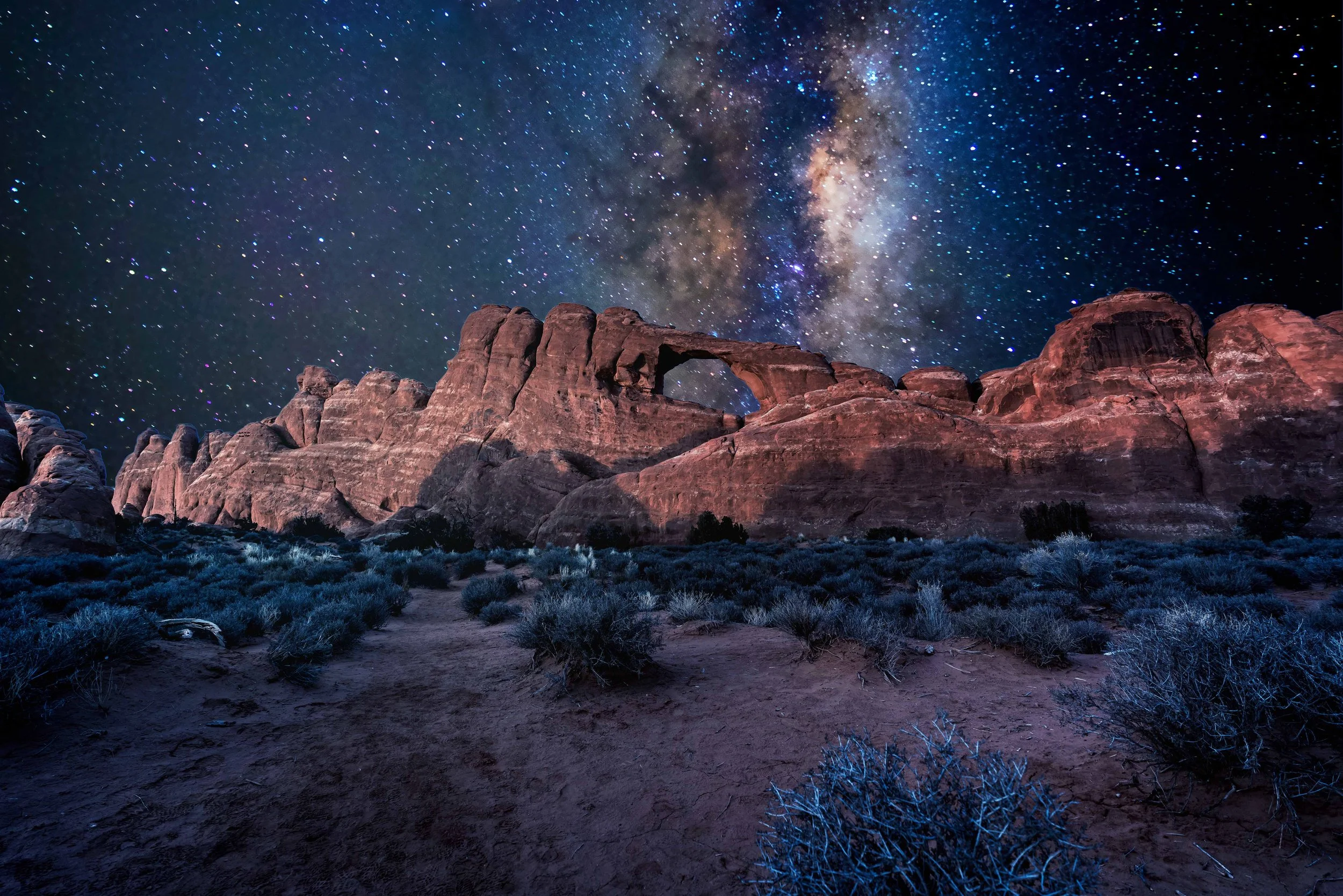
Arches National Park under a milky way star filled night sky in Moab, Utah. (Photo by S Quintans Adobe Stock)
With the reservation system retired, here's how Wasatch Front families can beat the crowds and still protect the park
For the first time in four years, Arches National Park will operate without a timed-entry reservation system in 2026 — and for Wasatch Front families planning their spring and summer trips to Moab, the change is a double-edged sword. The spontaneity is back: no more scrambling for digital permits three months in advance. But so are the crowds. Without a cap on entry, the National Park Service is warning visitors to expect temporary gate closures at peak hours, sometimes before 9:00 AM, when parking lots at Delicate Arch, the Windows Section, Devils Garden, and Double Arch hit capacity.
If you’re driving down from the Front, plan to arrive at the park entrance by 7:30 AM at the latest. Watch for electronic signs on Highway 191 — if they say “Park Full,” believe them. Have a Plan B ready: the Potash Road scenic drive or the trails at Dead Horse Point State Park are excellent alternatives until the afternoon lull opens the gates back up. Midweek visits (Tuesday and Wednesday) will be dramatically less crowded than weekends, and arriving after 6:00 PM virtually guarantees entry while offering a transformative experience under one of the darkest skies in the national park system.
Why the Reservation System Ended
The timed-entry pilot launched in 2022 after a decade of surging visitation. Between 2011 and 2021, Arches saw a 74% increase in annual visitors, peaking at a record 1.8 million. On busy holiday weekends, idling cars stretched back onto Highway 191, creating safety hazards and frustration before anyone ever reached a trailhead. The reservation system served as the Park Service’s emergency brake — and it worked. Visitors who made it inside could count on a parking spot at Delicate Arch rather than a gridlocked lot.
But the system exacted a cost. For many Wasatch Front residents, the Mighty 5 are the backdrop of cherished family traditions, and Arches had become the one park that required wedding-planner-level foresight to visit. Spontaneity — the soul of the American road trip — was largely lost.
The Economic Debate
The decision to retire the system wasn’t just about convenience; it was driven by fierce economic pressure. Grand County leaders and Southern Utah business owners were vocal critics of the capacity cap. Political leaders, including Senator Mike Lee, pointed to data suggesting visitor spending in the area dropped by more than 12% in the first year of the pilot. In a gateway community like Moab, where nearly 70% of jobs are tied to tourism, that kind of dip threatens the livelihoods of outfitters, restaurateurs, and hoteliers. Critics argued that public lands belong to the people and should be accessible without months of administrative hurdles.
An NPS-commissioned study found that local taxable sales held steady during the pilot — a point of dispute between park managers and political opponents of the system. Regardless of which data set tells the fuller story, the political momentum was clear, and the reservation requirement is gone.
The Strategic Adventurer’s Playbook
Navigating Arches in 2026 requires a shift in strategy. Your best tool is no longer a digital reservation — it’s flexibility.
Embrace the Dark Sky. Arches is an International Dark Sky Park. The “Golden Hour” at Delicate Arch is legendary, but the “Starlight Hour” is arguably more profound. Arriving after 6:00 PM means easier entry and a sky full of the Milky Way.
Go Midweek. The weekend surge usually begins Thursday afternoon and doesn’t let up until Sunday evening. Tuesday and Wednesday visits are a different experience entirely.
Monitor Real-Time Data. The park has invested in real-time traffic management. Before you leave your hotel or campsite, check the official Arches webcam at go.nps.gov/archeswebcam to see the current line at the gate.
Leave No Trace — The Stakes Are Higher Now
With the guardrails of a reservation system removed, the burden of conservation shifts squarely back to the visitor. The desert ecosystem is notoriously fragile. Biological soil crust — the bumpy, dark “living” soil that prevents erosion — takes decades to form but can be destroyed by a single stray footprint.
As we enjoy open skies and open gates, we must commit to the ethics that keep these places wild. Stay on designated trails. Pack out every scrap of waste, including orange peels and nut shells, which do not decompose in our arid climate. Resist the urge to build “souvenir” rock cairns. The goal for 2026 is to prove that high access and high protection can coexist.
Looking Toward a 21st-Century Park
The 2026 season is, in many ways, another test. If the park reverts to the peak chaos of 2021, the reservation conversation will return. But local leaders are already proposing a “Third Way” — the ACE Alternative (Access and Capacity Enhancement) — a vision that includes expanded shuttle systems, technological traffic monitoring, and potential new trailheads to disperse visitors across the park’s 76,000 acres.
For now, the gates are open. The red rocks are waiting. And while you no longer need a reservation to see the sun rise over the North Window, you’ll still need a bit of that Utah grit to beat the morning rush. Pack your patience, your water, and your sense of wonder — it’s going to be a historic season in the desert.
