

A Drained Reservoir Sends 3 Billion Gallons to the Great Salt Lake
Pineview's summer drawdown is becoming a fall boost for the lake, its wetlands, and millions of migrating birds.
If you spent any time at Pineview Reservoir this summer, you saw the shoreline retreat week by week. That water didn't disappear. It went downstream to Willard Bay, and now nearly 10,000 acre-feet of it is flowing out to the Great Salt Lake and its wetlands.
That's about 3.26 billion gallons, released through voluntary water leases and commitments from local partners. The water reached the Willard Spur on Sept. 30.
Why Pineview Was Drained
Ogden City drew Pineview down to replace a drinking water pipeline built in the 1930s that runs beneath the reservoir. The line serves roughly 135,000 people in Ogden, South Ogden, Riverdale and parts of Weber County, and it had been leaking about a million gallons a day.
The 6.4-mile pipeline replacement is expected to wrap up by early 2027. Project officials say a slightly above-average snow year should refill the reservoir.
Why It Matters Now
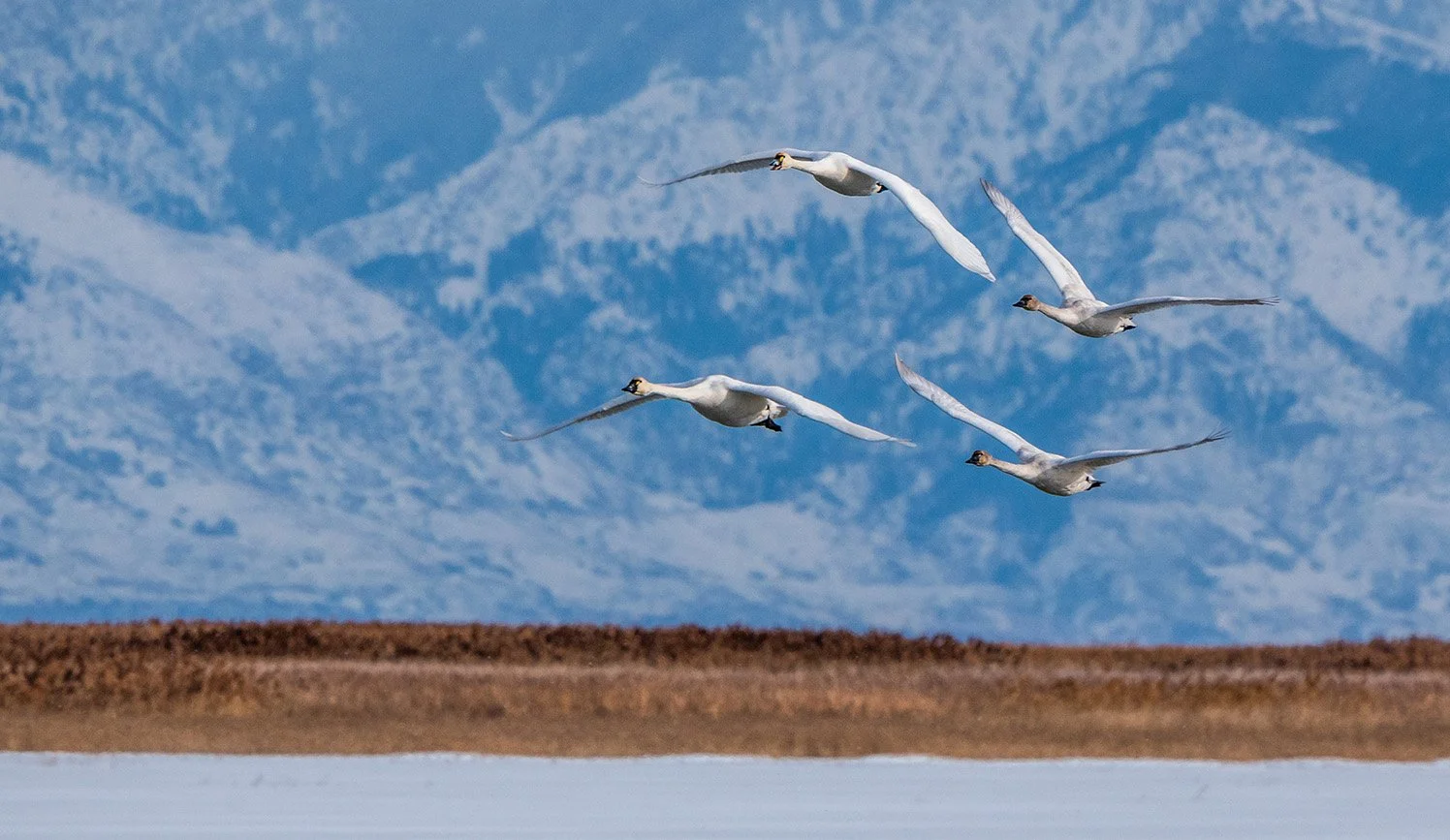
Timing is the key to this release. Fall is peak migration season, when millions of waterfowl and shorebirds stop at the Great Salt Lake to feed and rest on their way south. The water lands in the Willard Spur and Bear River Bay waterfowl management areas, which the Utah Division of Wildlife Resources manages.
The lake needs the help. Earlier this week it sat at just 29.7% full, 8.4 feet below its minimum healthy level. The south arm has dropped to 4,189.7 feet, only about a foot above the record low set in 2022.
Putting It in Perspective
Picture a football field covered in water one foot deep. That's an acre-foot, about 326,000 gallons. Now picture nearly 10,000 of them. That's this release: enough to fill roughly 5,000 Olympic swimming pools, or about a quarter of what Pineview Reservoir normally holds at the end of a summer.
It sounds like a lot. Then you set it beside the Great Salt Lake.
The lake is enormous and shallow, like a giant cookie sheet. Raising it just one foot takes somewhere between 700,000 and 1 million acre-feet of water. That means this entire release raises the lake by about a tenth to a fifth of an inch. You couldn't see it on a ruler.
Think of it as one bucket on a very big fire:
One foot of lake level would take about 70 to 100 releases this size.
What the lake needs every year: Recent modeling suggests about 800,000 extra acre-feet a year, year after year, to move it back toward a healthy range. That's the equivalent of 80 releases like this one, every single year.
How far it has to go: The lake sits about 8.4 feet below its minimum healthy level.
So why does it matter? Because this water isn't about lake level. It's going into the Willard Spur and Bear River Bay marshes, which are shallow wetlands where a little water spreads a long way. It arrives at the exact moment millions of migrating ducks, geese and shorebirds are stopping to feed and rest. For the lake as a whole, it barely registers on the gauge. For the birds passing through this fall, it's a lifeline.
That's the honest picture: a real win for the marshes this season, and a reminder of how much more it will take to bring the lake itself back.
Who Made It Happen
The Great Salt Lake Commissioner's Office coordinated the release with:
Great Salt Lake Watershed Enhancement Trust
Great Salt Lake Rising
Ogden Bay Water Users Association
Huntsville Abbey Farm
Ogden City
Weber Basin Water Conservancy District
Great Salt Lake Commissioner Hannah Freeze framed it as proof that collaboration works, saying, "The health of the lake is bigger than all of us." Marcelle Shoop, who directs the Watershed Enhancement Trust, stressed that getting water to the Willard Spur in the fall is especially important for the lake's health.
What It Means for You
The lake's health reaches every home on the Wasatch Front, from the air we breathe when exposed lakebed dust blows in to the wildlife that makes northern Utah special. Partnerships like this show that every drop counts, and that water users, cities and conservation groups can find ways to get more water where it's needed.
Sources
KSL.com, "Great Salt Lake, migratory birds receive a boost from Pineview Reservoir project," Oct. 6, 2026 — ksl.com/article/51633054
FOX 13 / Great Salt Lake Collaborative, "Great Salt Lake, surrounding wetlands to receive 3.26 billion gallons of water from Willard Bay release" — fox13now.com
KUTV, "Pineview Reservoir project drives 3.26B-gallon water release to Great Salt Lake wetlands" — kutv.com
KUER, "How fast Pineview Reservoir refills after pipeline repair is up to Mother Nature," June 29, 2026 — kuer.org
TownLift, "Why Pineview Reservoir will be almost empty by this fall," July 2026 — townlift.com
Salt Lake Tribune, "Great Salt Lake might jump 1.2 feet this spring," March 2024 — sltrib.com
WorldAtlas, "How Long Would It Take To Refill The Great Salt Lake?" — worldatlas.com
FRIENDS of Great Salt Lake, Kevin Perry's "Salt & Sky Brief" Issue #7 — fogsl.org
Utah News Dispatch, "Donation of enough water to fill a small reservoir now headed to the Great Salt Lake," Sept. 2024 — utahnewsdispatch.com
About the numbers: The comparisons in "Putting It in Perspective" (swimming pools, inches of lake level, and number of releases) were calculated with AI from the sourced figures above. They are rounded estimates meant to show scale.