

Wasatch Front Rodeo Season is Alive and Well
RIDING DEEP: UTAHS RODEO SEASON IS ALIVE, WELL, AND TOUGHER THAN EVER
By Cal Tebbs | Utah Sports Ink
Long before there was a Delta Center, a Days of '47 Arena, or a Cowboy Channel broadcast truck rolling down Butterfield Park Way, there were cowboys. Working cowboys. Men who spent their days on horseback managing livestock across the valleys and foothills of what would become Utah — and who, when the work slowed down for a spell, couldn't resist the urge to see who among them was the best.
That impulse — competitive, practical, deeply Western — is exactly where rodeo comes from. Rodeos grew out of the skills necessary for 19th-century cattle ranch life, providing a platform for cowboys to test their abilities against one another in events like steer roping. What began as informal competitions between working hands evolved into organized events, and by the late 1800s, towns across the West were building arenas and charging admission. The first organized rodeo with admission and official prizes was held in Prescott, Arizona in 1888. The sport grew fast from there — Cheyenne Frontier Days launched in 1897, the Calgary Stampede in 1912 — and the cowboy became something more than a laborer. He became a competitor. An athlete. An American archetype.
Utah was never far behind.
A Tradition That Runs Deep
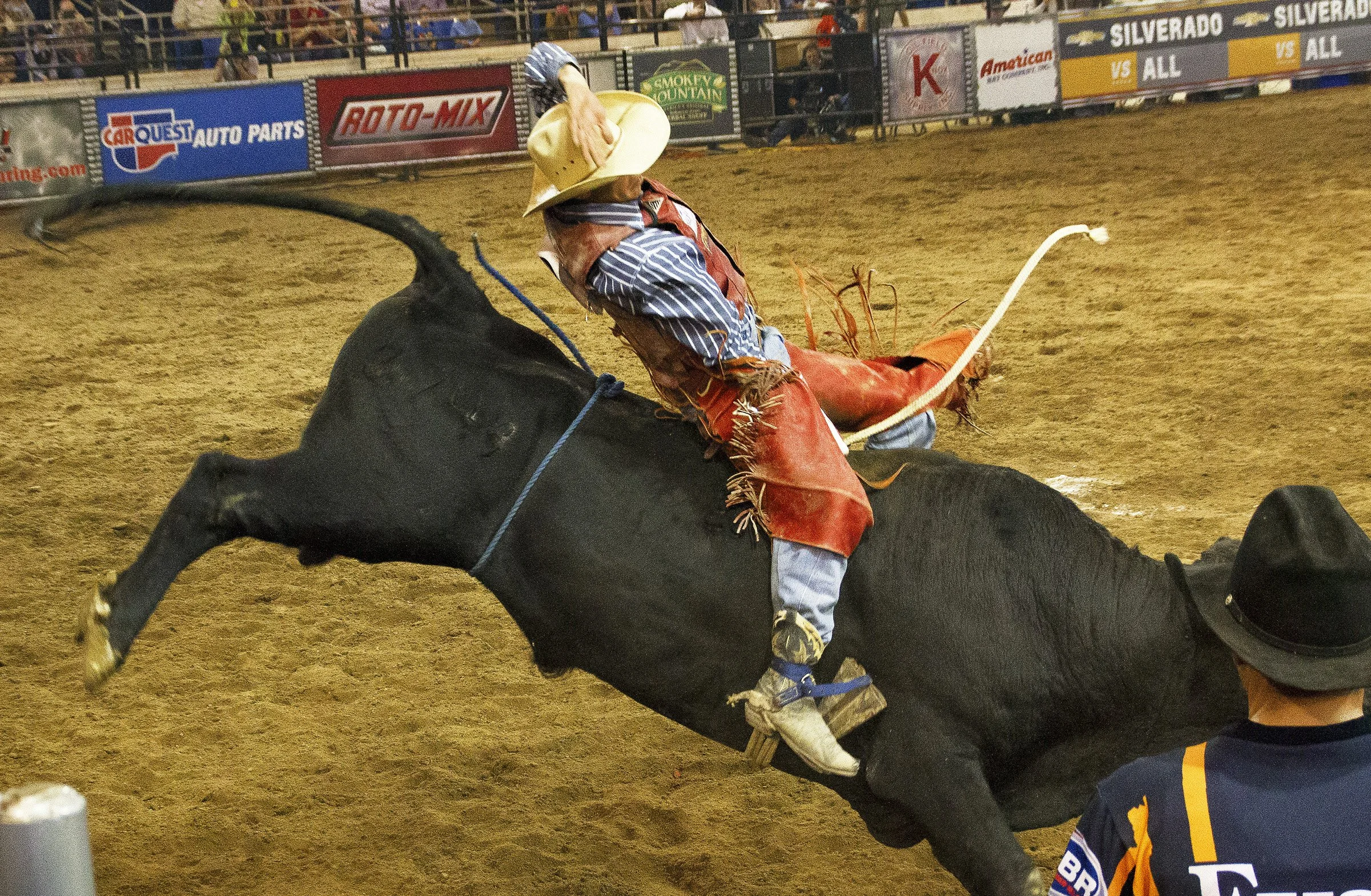
Professional bull riding competition image by Danny Raustadt | Dreamstime.com
Established in 1921, the Strawberry Days Rodeo in Pleasant Grove is the longest continually running rodeo in Utah — a fact that says something important about this state. While other parts of the country were urbanizing and leaving their agricultural roots behind, the communities along the Wasatch Front kept their arenas standing and their rodeos running. Pleasant Grove has held its rodeo every June, without interruption, for more than a century. That's not nostalgia. That's identity.
The Ogden Pioneer Days Rodeo carries its own deep roots, dating to 1934, celebrating the pioneers who first settled in Northern Utah. The Days of '47 Rodeo in Salt Lake City is tied directly to Pioneer Day itself — each July, as Utah commemorates the 1847 arrival of pioneers to the Salt Lake Valley, the rodeo serves as a living tribute to the western skills and values that shaped this landscape. And in Heber Valley, the Mountain Valley Stampede Rodeo has honored a deep-rooted Western tradition for more than 75 years — a homecoming where generations gather to celebrate grit, heritage and the cowboy way of life.
These aren't regional curiosities. They are anchors of community identity, passed from grandparents to grandchildren, with the smell of arena dirt and livestock as familiar as any church pew or gymnasium floor.
Still Going Strong — and Producing Champions
Here's something that might surprise people who assume rodeo is fading: Utah is currently producing some of the best professional rodeo athletes in the country.
Dean Thompson, a 22-year-old from Altamont, Utah, claimed the 2024 PRCA Bareback Riding World Championship at the National Finals Rodeo, cashing in on eight of ten rounds and collecting over $143,000 at the NFR alone. Stetson Wright of Milford — a name rodeo fans know well — has been one of the dominant all-around cowboys on the PRCA circuit for years. These are athletes competing at the highest level of their sport, and they grew up in the same rodeo culture that fills the grandstands every June in Pleasant Grove and every July in Salt Lake City.
By 1985, one-third of PRCA members admitted to a college education and half admitted to never having worked on a cattle ranch — proof that rodeo long ago evolved beyond its working-ranch origins into a full athletic pursuit. Today's competitors train year-round, travel the full PRCA circuit, and compete for world standings that lead to the National Finals Rodeo each December in Las Vegas. The Wasatch Front's summer rodeo season is not just entertainment — it's where many of those world standings points get won.
What's Coming This Spring and Summer
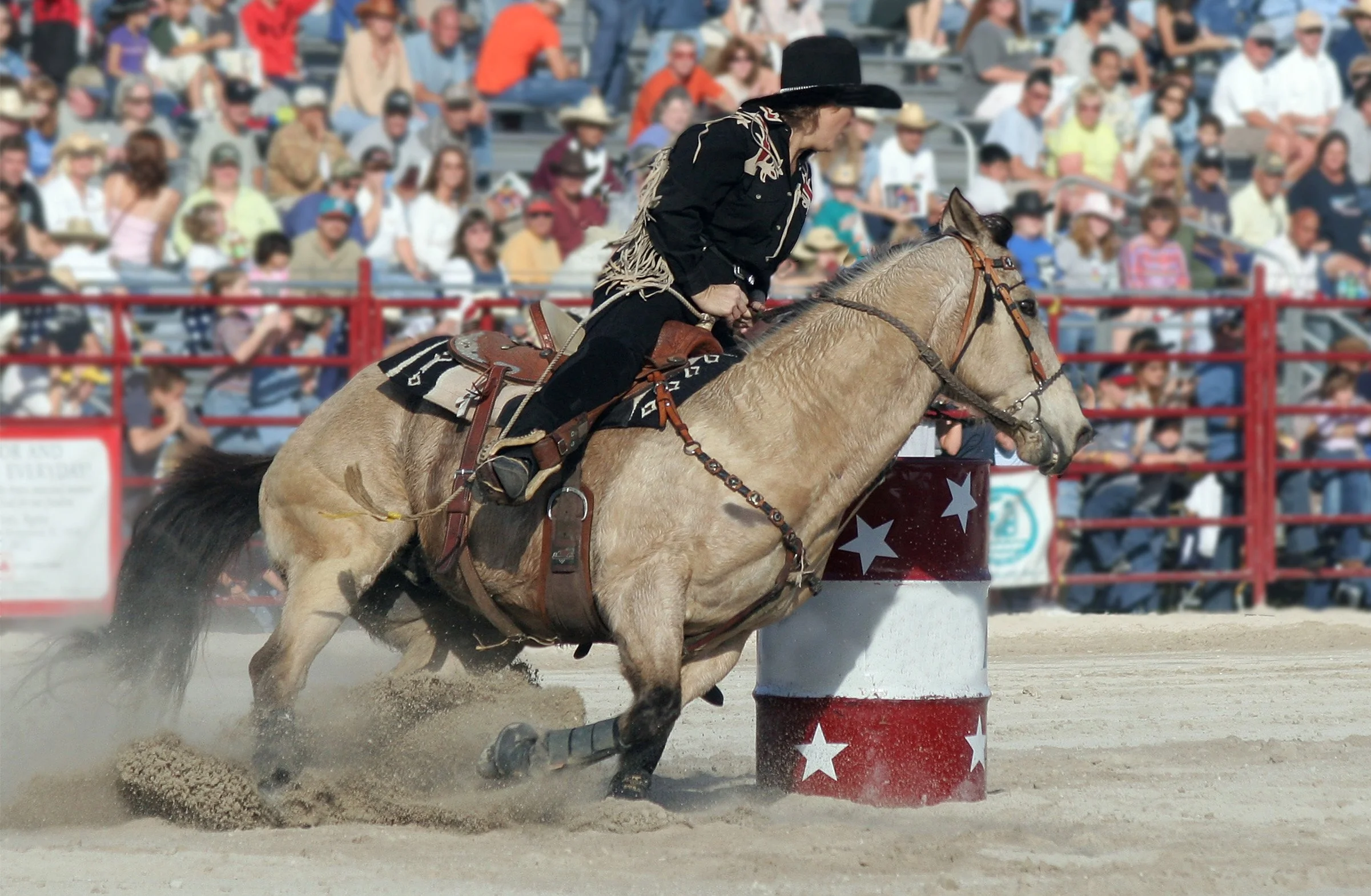
Barrel racing photo by Michael Klenetsky | Dreamstime.com
The 2026 Wasatch Front rodeo calendar is stacked. Here's the lineup worth knowing:
Fort Herriman PRCA Rodeo — 20th Anniversary May 28–30 | W&M Butterfield Park, Herriman | herrimanrodeo.com The milestone edition of one of the valley's best-loved PRCA events. Three nights of full competition — bull riding, barrel racing, bronc riding, roping — with fireworks Friday and Saturday and a 62-foot American flag national anthem ceremony to open each show. Being broadcast this year on The Cowboy Channel. Buy early; it sells out. Ranked #4 in the Mountain & Main Magazine “Top 10 Things To Do in the Spring & Summer of 2026.”
Strawberry Days Rodeo June 17–20 | PRCA Rodeo Grounds, Pleasant Grove | strawberrydaysrodeo.com Set against the foothills of Mount Timpanogos, this PRCA-sanctioned event blends small-town charm with top-tier talent, featuring bareback and saddle bronc riding, bull riding, barrel racing, steer wrestling, and team roping. Over a century old and still packing the grandstands.
Utah Days of '47 Rodeo July 21–25 | Days of '47 Arena, Utah State Fairpark, Salt Lake City | utahdaysof47rodeo.com The world's only gold medal rodeo, played out over five days and culminating in a Gold Medal round. The biggest stage in Utah rodeo, with the Frontier Fun Zone, Lakota Tribe experiences, and the kind of crowd energy that only a sold-out arena can produce.
Mountain Valley Stampede Rodeo First weekend of August | Wasatch County Event Complex, Heber | wasatchparksandrec.com A great family event featuring top stock from Powder River and the best cowboys and cowgirls from across the nation, rounded out by fireworks, a drone show, and specialty acts. Heber Valley in August doesn't get better than this.
The Bottom Line
Rodeo along the Wasatch Front isn't surviving. It's thriving. From a 105-year-old tradition in Pleasant Grove to a 20-year milestone in Herriman to a sold-out gold medal showdown in Salt Lake City, the sport has never been more accessible, more competitive, or more worth your time. These events are genuinely great nights out — for families, for longtime fans, and for anyone who wants to watch elite athletes do something that looks impossible and make it look easy.
The arenas are open. The chutes are loaded. Get your tickets early.
(Research compiled with AI assistance. All sources independently verified by Mountain & Main editorial staff.)