Ticks in the Backyard
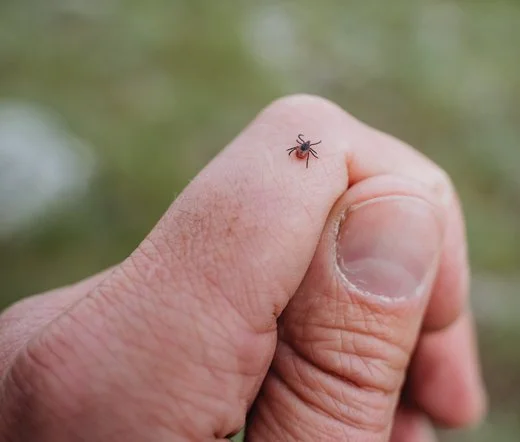
A Memorial Day weekend report from Orem is a reminder of what’s already crawling along the Wasatch Front — and what to do about it.
Over Memorial Day weekend, KUTV 2 News reported tick sightings near Orem City Center Park, with neighbors posting photos of ticks turning up in residential backyards adjacent to the park. It’s a small story on its own. But it lands in the middle of a Utah tick season that public health officials say is well underway.
The Rocky Mountain wood tick is the species you’re most likely to encounter along the Wasatch Front. According to the Utah Department of Health and Human Services, it’s active from snowmelt through about mid-July and is most commonly found in mountainous and brushy terrain — meaning the foothills, the canyon mouths, and the wilder edges of our neighborhoods where lawn meets sage. It can transmit Colorado tick fever and, in rarer cases, Rocky Mountain spotted fever. A second species, the western black-legged tick, can carry Lyme disease, though Utah’s documented case count remains low and most reported Lyme infections in Utah residents trace back to travel out of state.
The good news: tick risk is one of the more manageable summer hazards. The basics still work — long pants and sleeves in tall grass, EPA-registered insect repellent on skin and permethrin on clothing, and a tick check on yourself, your kids, and your dog after any time spent in brush or unmowed grass. If you find one attached, fine-tipped tweezers, steady upward pressure, and a sealed bag for identification.
For the yard itself, the playbook is straightforward. Keep grass short. Pull leaf litter away from the foundation and the fence line. Create a three-foot dry buffer of wood chips or gravel between lawn and any wooded or brushy area. And for households that want a treated perimeter, a licensed pest control company can apply a targeted barrier spray to the yard edges where ticks actually live.
“Ticks aren’t our headline pest along the Wasatch Front, but we do see them — especially in yards that back up to foothills, open space, or heavy landscaping,” said Preston Heninger, from Arvo Pest Control. “The same perimeter treatment that handles spiders, wasps, and ants does a real job on ticks too. The biggest thing homeowners can do themselves is keep the grass short and pull the leaf litter away from the house. A good pest control plan will handle the rest.”
For more from the Utah Department of Health and Human Services on tick identification and submission for testing, visit epi.utah.gov.
Source: KUTV 2 News, Utah Department of Health and Human Services. Mountain & Main Magazine utilizes AI tools for research assistance and draft development.