

Same Drought, Different Cities, Different Rules Across Utah
We may be hearing different rules from different cities this spring. The drought is louder than all of them — and there's plenty every household can do.
Home Front | Spring 2026 Your Home. Your Retreat.
By now you've probably heard one of two things from your city: a polite ask to use less water, or a more pointed warning about fines if you don't. Maybe you've heard nothing at all and are wondering whether you missed the memo.
Here's the thing — your friend in the next city over almost certainly heard something different than you did. A house in Bountiful and a house in Sandy are both on the Wasatch Front, both staring at the same brown foothills, both living under the same drought. But they play by completely different water rules this spring.
That's not a mistake. It's how Utah water actually works. And once you understand it, the rules in front of you stop feeling random.
Where we are
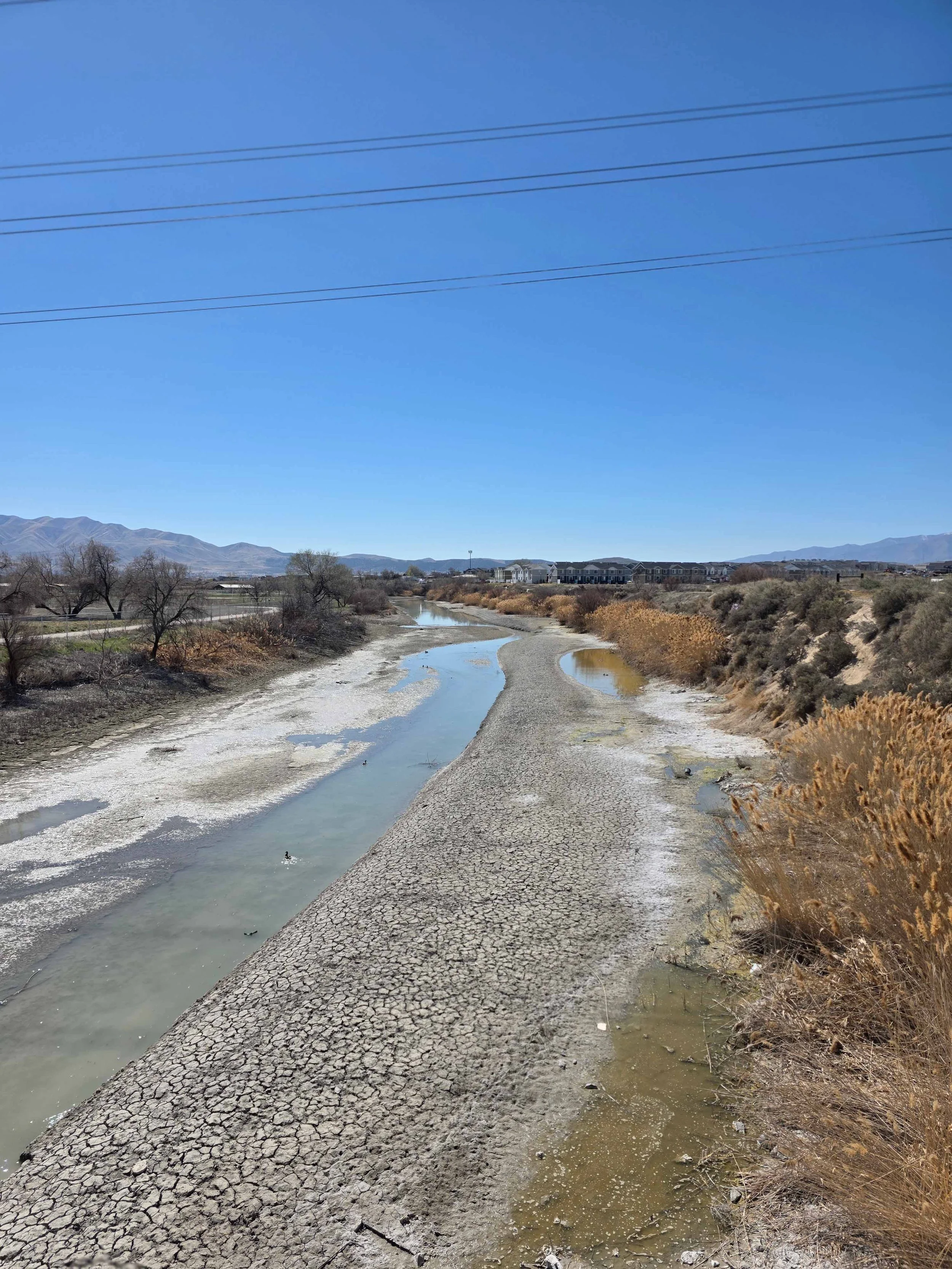
Utah just finished its lowest snowpack winter on record. Measurements taken April 1 — the standard date water managers use to gauge the year ahead — showed 2.7 inches of snow water equivalent in Utah's mountains, compared to a typical 14 inches. The Wasatch Front gets nearly all of its drinking, sprinkling, and garden water from the snow that piles up in the mountains each winter and melts down through spring and summer. Less snow on top means less water on tap — for our lawns, our showers, our rivers, and the Great Salt Lake at the bottom of the watershed.
So cities and water suppliers up and down the Front have started telling residents to use less. Some are politely asking. A few are threatening fines. Most are somewhere in between. The patchwork is what's confusing.
Cities don't make water. They buy it.
Why your rules aren't your neighbor's
Four things are worth knowing.
Cities don't make water. They buy it. Most Wasatch Front cities don't own the rivers, reservoirs, or aquifers their water comes from. They purchase that water — wholesale — from a regional water district, then deliver it to your house through their own pipes.
Three big water districts cover most of the Front. Jordan Valley Water Conservancy District serves most of Salt Lake County south of downtown. Weber Basin Water Conservancy District serves Davis and Weber counties. Central Utah Water Conservancy District serves Utah County and parts of Salt Lake County. Each district has its own reservoirs, its own contracts, and its own water year. When the district announces conservation rules, those rules ripple out to every city it serves.
The water districts are public, not private. So who owns the agency that ultimately controls your tap? You do, in a sense. Utah's water conservancy districts are public bodies created under state law — not corporations. They're funded by three streams: the wholesale rates cities pay them, a small slice of your annual property tax bill (it shows up as a separate line item on your tax notice for Jordan Valley, Weber Basin, or Central Utah), and impact fees collected on new construction. Their boards are appointed — usually by county commissioners or the governor — their meetings are open to the public, and their financials are posted online. When one of these districts announces a conservation rule, it's a public agency making a public decision, one you've been paying into whether you noticed the line item on your tax bill or not.
Cities can add stricter rules on top. A water district might politely ask residents to cut back. The city it serves might decide a polite ask isn't enough and add fines for violators. That's why Riverdale and Woods Cross (both Weber Basin) have fines, while Bountiful (also Weber Basin) doesn't. Same wholesale water. Different city governments making different calls.
A handful of places are outside this pattern entirely. Park City runs its own utility, draws from local streams, and has had a permanent three-day watering schedule for years — drought or not. Salt Lake City owns most of its own water and treats Cottonwood Heights as a customer, which is why those two cities track together.
If you want to know which rules actually apply to your house, pull out your monthly water bill. The provider listed there is the one whose rules you live under. ZIP codes, school districts, and county lines have nothing to do with it.
What to do this week, wherever you live
These work everywhere on the Front, no matter what your city has announced.
Don't turn the sprinklers on yet. Most Utah lawns don't need water until at least May 15. The Utah Division of Water Resources estimates each watering session uses about 3,000 gallons for a typical quarter-acre yard, so every watering you skip in late April and early May saves thousands of gallons. Grass that wakes up thirsty also grows deeper roots, which means a lawn that handles July better.
When you do start, water before sunrise. Anything between 10 a.m. and 6 p.m. mostly evaporates before it reaches the roots. Pre-dawn watering is the single biggest change most homeowners can make.
Cycle and soak. Instead of one long sprinkler run, set three shorter runs with thirty minutes between them. Hard Utah soil doesn't drink — it absorbs. Long runs just send water down the gutter.
Mow tall. Three inches at minimum. Taller grass shades its own roots and holds soil moisture longer.
Take the free help. Most water providers on the Front partner with Utah State University to offer free water checks during the summer. A trained evaluator — often a USU student — walks your yard, tests your sprinkler heads, and gives you a custom watering schedule. No charge, no sales pitch. The specific program varies by where you live: Salt Lake City Public Utilities customers can call 1-877-SAVE-H2O. Elsewhere, start at slowtheflow.org or check your monthly water bill for your provider's contact info. It's the best deal in Utah water.
Where your city stands right now
As of April 30, 2026. Conditions are changing weekly — expect more cities to add rules through May.
Weber County
Ogden — Voluntary. Following Weber Basin's request to delay watering until May 15.
Riverdale — Required. No watering before May 1, fines for violations. Rates jump 25% on every gallon over 10,000 per month — and 10,000 is roughly typical indoor use (showers, dishes, laundry) plus modest outdoor watering, so any household with regular lawn watering will cross it quickly. In effect through November 1.
Davis County
Bountiful — Voluntary. Conservation requested; no city-specific rules announced.
Layton — Required. Secondary (outdoor) water allocation cut 20% for the season. No sprinklers before May 15 or after September 15. Once the season starts: 2 days per week, no watering 10 a.m.–6 p.m. First-offense violations get a written warning; repeat offenses face fines starting at $100. Track your secondary water use at weberbasin.gov.
Woods Cross — Required. No outdoor watering before May 15 or after September 15. Fines for violations.
Salt Lake County
Cottonwood Heights — Voluntary. Same conservation request as Salt Lake City.
Draper, Herriman, Murray, Sandy, South Jordan, West Jordan, West Valley City — Voluntary. Following Jordan Valley's request to cut about 10% indoor and outdoor — roughly the same scale of effort as Salt Lake City's 30-gallon-a-day ask below.
Midvale — Voluntary, but with a price. A 25% drought surcharge on the water-usage portion of every bill starting May 1 (the $30 monthly base fee stays the same). Households using under about 12,000 gallons per month barely feel it; heavy outdoor waterers feel it most.
Salt Lake City — Voluntary. Asking residents to save about 30 gallons per household per day. To picture that: a 2-minute shorter shower saves about 5 gallons. Skipping one dishwasher cycle saves 3–4 gallons on a newer Energy Star model, or 10–15 on a pre-1994 one. Two fewer toilet flushes saves about 3 gallons with a post-1994 toilet, or 7 with an older one. For bigger structural savings: smart sprinkler controllers, WaterSense toilets, and WaterSense showerheads — many of which qualify for rebates at utahwatersavers.com.
Summit County
Park City — Year-round schedule. Odd addresses water Wednesday, Friday, Sunday. Even addresses water Tuesday, Thursday, Saturday. Never Mondays. Never between 10 a.m. and 6 p.m.
Utah County
Lehi, Orem, Provo — Voluntary. Central Utah Water Conservancy District passed its first-ever drought resolution in April. Cities are leaning on rebates and free programs rather than required cuts — for example, Provo Power's free shade-tree program (NatureShade) and Provo City's low-water grass seed (about $6.50 for a 5-pound bag). Statewide rebates for landscaping, toilets, and smart controllers: utahwatersavers.com.
Statewide updates: drought.utah.gov. Rebates and free water checks: utahwatersavers.com.
Sources: Salt Lake City Department of Public Utilities; Jordan Valley Water Conservancy District; Weber Basin Water Conservancy District; Central Utah Water Conservancy District; Park City Public Utilities; Standard-Examiner; KUTV; KPCW; KSL; Deseret News; Utah Division of Water Resources; Utah Foundation, Paying for Water report series; Utah Code Title 17B (Local Districts); Utah Water Savers; Slow the Flow.
Reporting and writing assisted by AI; reviewed and edited by Mountain & Main editorial.