

Utah Takes Flight
What the eVTOL testing program actually means — for the skies above us, and for your daily life
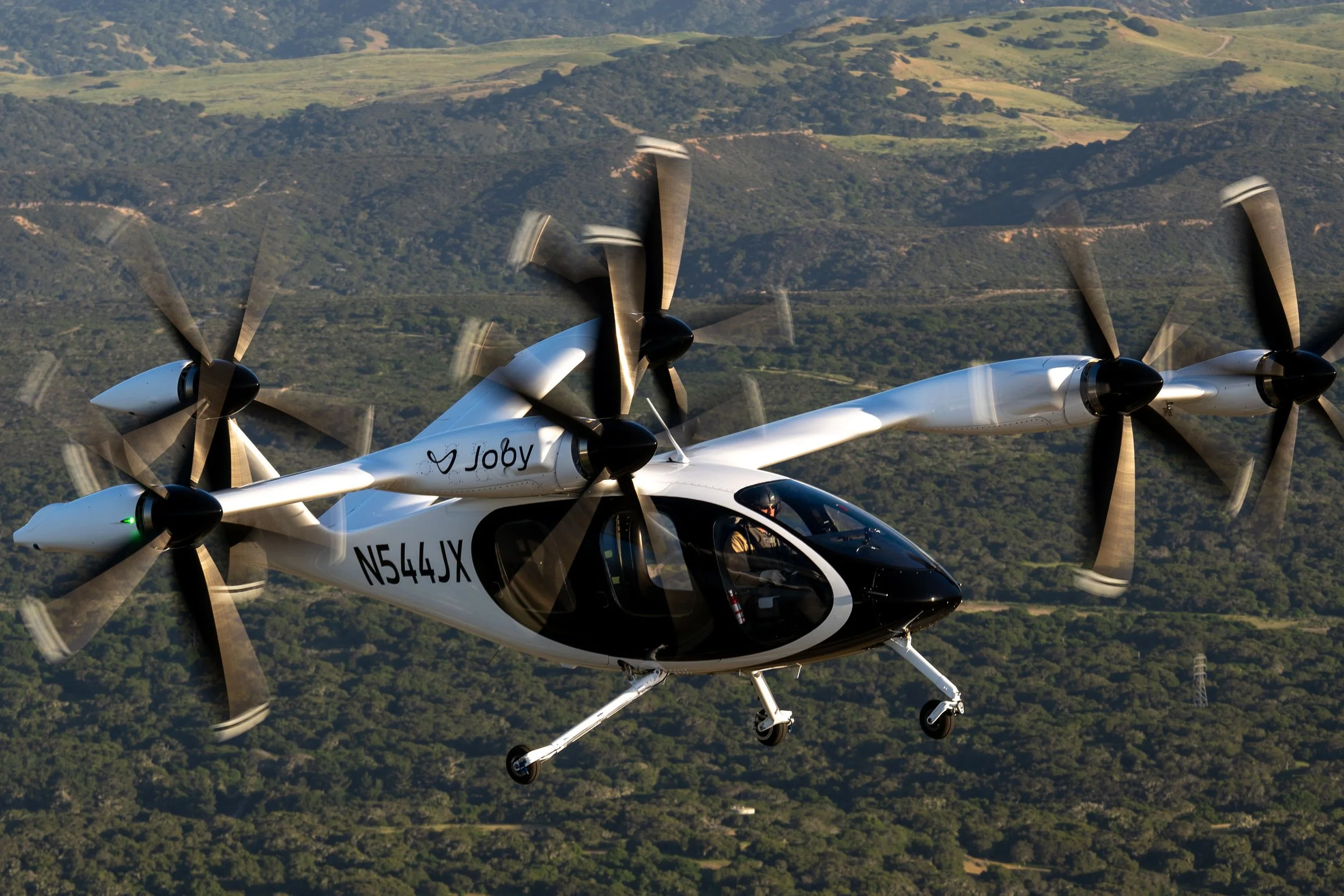
Joby Aviation is one of the key aircraft companies in the mix. Starting as soon as this summer, real aircraft will begin flying real routes — carrying passengers, cargo, or both — under a new FAA authorization framework.
Utah is officially one of eight states selected to help write the rules for the next era of aviation. But if you've been skimming headlines, you might be wondering: what does that actually look like on the ground? What are they testing, why does it matter, and will any of this ever affect you?
Fair questions. Here's what you need to know.
The Program Has a Name — and a Scope
Utah's project is called uFLY: America's AAM Crossroads to the West. Led by the Utah Department of Transportation, it spans five states — Utah, Arizona, Idaho, Oregon, and Oklahoma — and involves more than 30 public and private partners. The key aircraft companies in the mix are Joby Aviation, BETA Technologies, Ampaire, Sikorsky (a Lockheed Martin company), and Alpine Air, among others.
The western United States offers one of the most dynamic testing environments in the country for advanced aviation. Across the five-state partnership, aircraft will operate in a wide range of conditions — from high-altitude mountain airports and extreme desert climates to wildfire-prone landscapes, dense urban airspace, and remote rural communities. That geographic diversity is exactly why Utah's application was compelling to federal evaluators. The FAA needs data from the full range of conditions these aircraft will eventually face. Utah is a proving ground that delivers almost all of it.
What Does "Testing" Actually Look Like?
Starting as soon as this summer, real aircraft will begin flying real routes — carrying passengers, cargo, or both — under a new FAA authorization framework. The Operational Data collection phase is planned to begin in mid-2026, operating under limits established by the FAA that define what activities can be performed. Think of it less like a lab experiment and more like a supervised trial run with the rulebook being written in real time.
What makes this pilot program unusual is that it lets companies begin testing their aircraft before full certification is complete. That head start has obvious appeal — Beta Technologies CEO Kyle Clark said being selected means the company can begin aircraft operations a full year ahead of schedule.
Over the three-year program, engineers, regulators, and operators will be collecting data on everything from how the aircraft handle Utah's high-altitude airports and mountain weather to how air traffic controllers manage a new class of aircraft sharing airspace with commercial jets. Testing includes performance validation, control and handling, and maintenance and operations — data the FAA will use to make final determinations on certifying each aircraft design. The rules written here won't just govern Utah. They'll shape how this technology is integrated into airspace across the entire country.

Joby's S4 Carries a Single Pilot and Four Passengers
In the early days of eVTOLs, its estimated prices will be close to that of Uber Black or Premium rides — around $6 per passenger per mile. To put that in perspective: a 25-mile flight would run roughly $150. Your car covers the same distance for about $4 in gas.
What Are They Actually Analyzing?
The testing phase is designed to answer questions regulators have never had real-world data on before:
How do eVTOLs perform at elevation — say, Park City at 7,000 feet versus Salt Lake Valley at 4,200? How do they handle the kind of wind shear that funnels through mountain corridors? Can they reliably serve rural communities where emergency medical response times can mean the difference between life and death? How does air traffic control manage them alongside traditional aircraft? What does a network of "vertiports" — the takeoff and landing pads these aircraft use — need to look like to function efficiently in an urban environment?
According to Joby, testing has helped validate aircraft design and manufacturing processes, gather compliance data, and develop operating and maintenance manuals — the kind of documentation the FAA requires before any aircraft can carry paying passengers at scale.
The data gathered in Utah will be especially valuable precisely because Utah is hard. Thin air, dramatic elevation changes, extreme temperature swings, and wildfire smoke all stress-test these aircraft in ways a flat, sea-level environment simply can't replicate.
What Does This Mean for the Average Utahn?
Here's where it gets personal. The most immediate impact most people will notice is... nothing. The testing phase runs through roughly 2028-2029, and most flights will happen at or near existing airports and established corridors, not above neighborhood streets.
But the realistic near-term scenarios are genuinely significant for life along the Wasatch Front:
Emergency medical transport. Rural Utah communities — think communities in San Juan County, Kane County, or anywhere hours from a Level I trauma center — could see response times cut dramatically. An eVTOL carrying a paramedic team doesn't need a runway and doesn't get stuck behind a highway accident. This may be the most life-changing application of the technology, and it's one the Utah program is explicitly designed to test.
Airport connections. The Salt Lake City to Park City corridor is a textbook use case. Joby's S4 carries a single pilot and four passengers, travels up to 100 miles on a single charge, and reaches a maximum speed of 200 miles per hour. That trip — currently 35 minutes on a good traffic day, an hour-plus during ski season — becomes a 10-minute flight.
Regional connectivity. For communities along the Wasatch Front that don't sit near a major highway interchange, air mobility could eventually mean genuine regional access — to jobs, to medical care, to airports.
The Cost Reality
This is where expectations need to be grounded. eVTOLs will not replace your morning commute in 2027. Not even close.
In the early days of eVTOLs, Archer estimates prices will be close to that of Uber Black or Premium rides — around $6 per passenger per mile. To put that in perspective: a 25-mile flight would run roughly $150. Your car covers the same distance for about $4 in gas.
A 25-mile ride would cost roughly $82.50 at Archer's projected $3.30 per seat-mile — and while that sounds expensive compared to the $37.50 you'd pay for the same Uber ride, the flight takes just 12 minutes versus nearly an hour by car.
The long-term trajectory is more encouraging. By 2030, industry analysts project that a 15-mile air taxi trip will cost $15 to $30 — potentially less than the equivalent Uber ride in many major cities, and completed in one-quarter of the time. As aircraft production scales up, competition increases, and vertiport infrastructure matures, the economics are expected to improve significantly.
The honest assessment: early service will be priced for business travelers, medical transport, and people for whom time is genuinely money. Mass-market pricing is a 2030s story. The price premium for eVTOL flights compared with ground transportation will initially limit their use to business travelers and mid- to high-income individuals — at least until scale changes the math.
The Bottom Line
Utah didn't stumble into this moment. The state pursued it — assembling a multi-state coalition and a roster of serious aerospace partners to make a compelling case to federal evaluators. With 90 percent of Utahns living within a 30-minute drive of an airport, state leaders are advancing sustainable and innovative mobility options that keep Utah moving.
The skies above the Wasatch Front are about to become a real-world laboratory. The rules written here — in Utah's mountain air, over Utah's terrain, under Utah's conditions — will determine how this technology serves communities across America for the next half century.
The future of flight is being tested in your backyard. Summer 2026.