

November is when mule deer leave the high country and settle onto the Wasatch benches. Here's how to see them, and how to stay safe while you do.
By Cal Tebbs
We delivered our summer issue house to house along the Wasatch benches, and the deer were there too. One doe browsed a hedge beside a front walk. Another stood on a sidewalk in front of a row of blue spruce and watched our car pass. A third grazed under a stand of scrub oak a few feet from the curb, ears up, not the least bit worried.

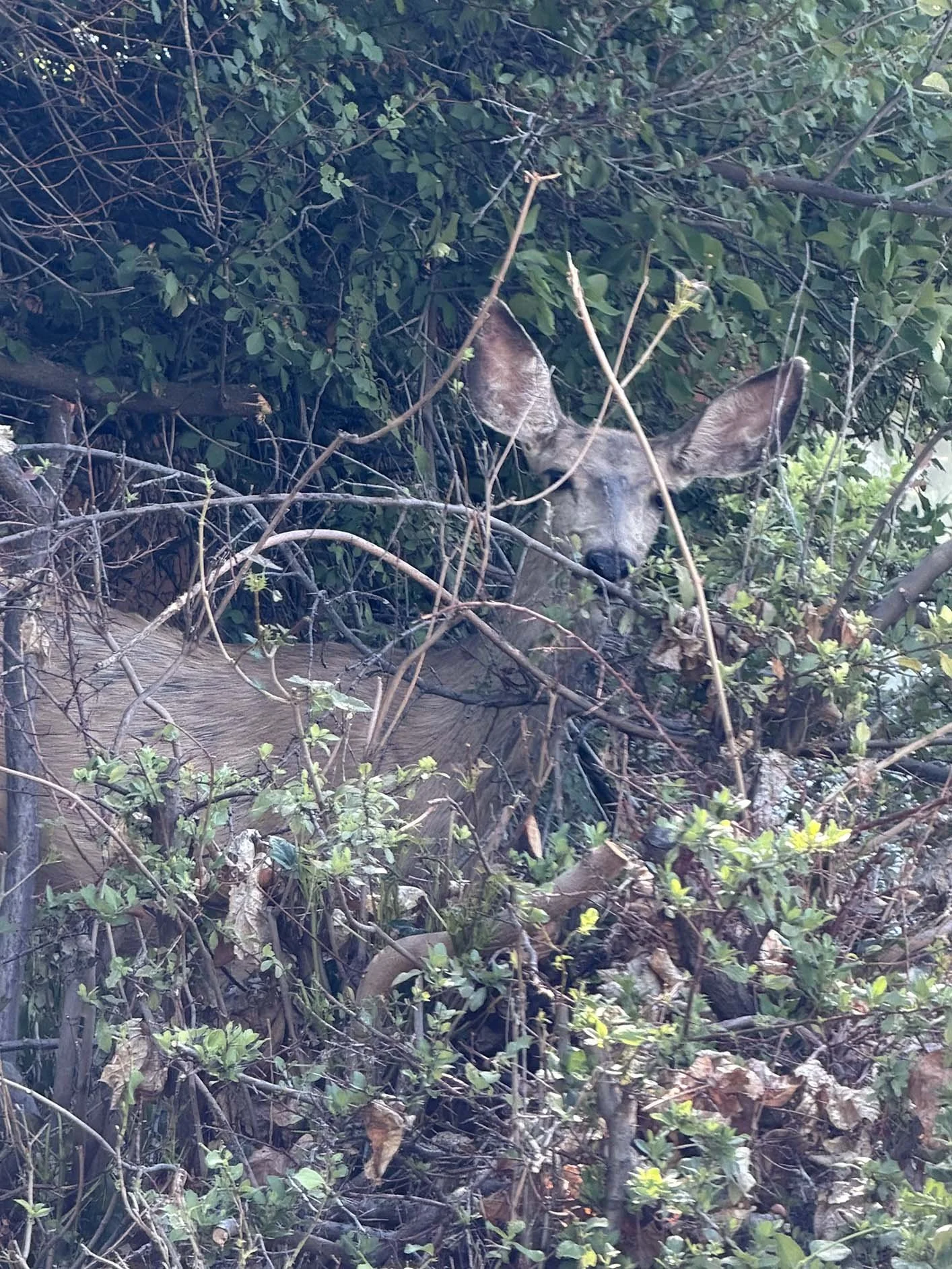
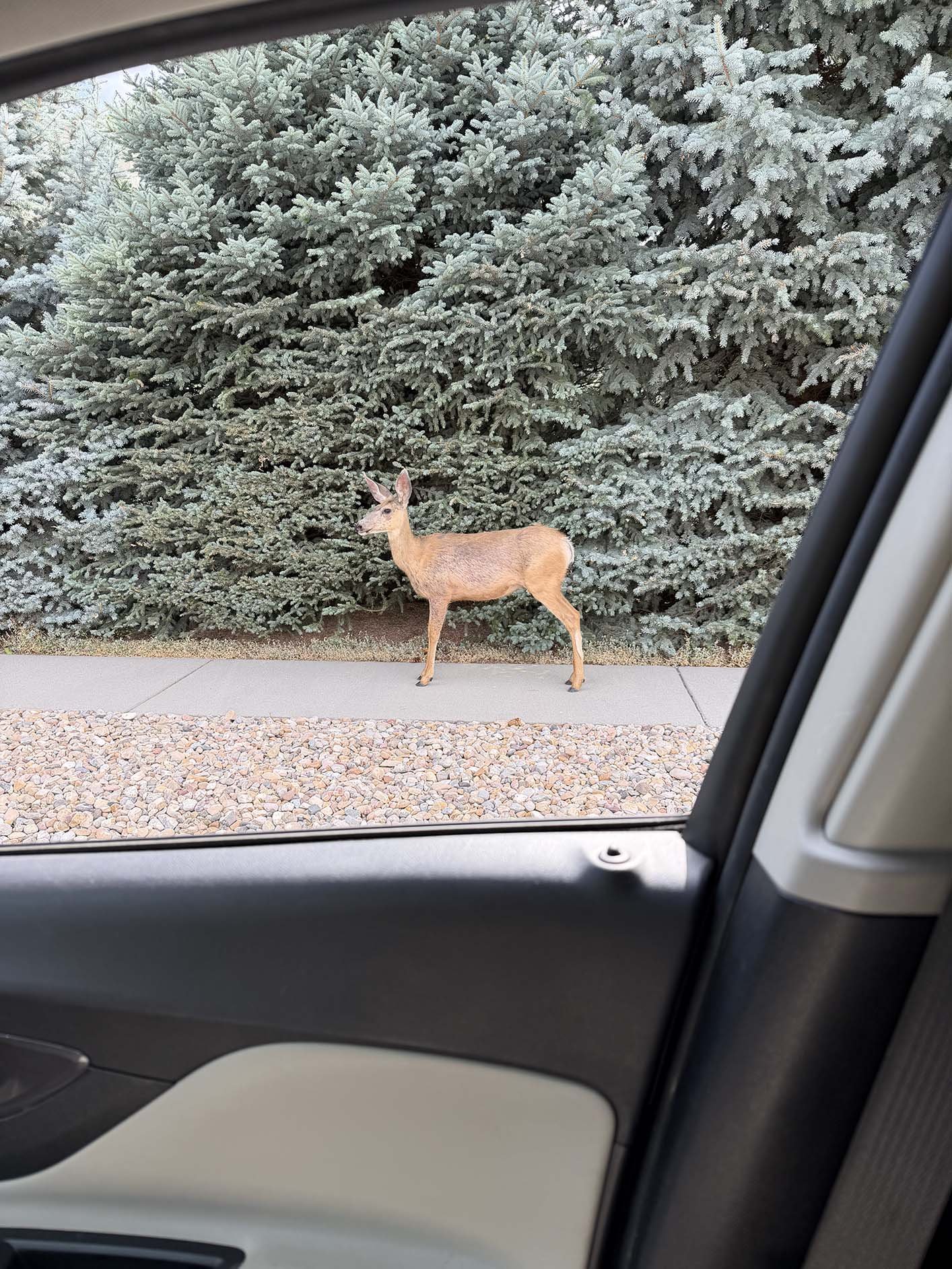
Those were the deer that stay low all year. This month they'll have company. As snow returns to the mountains in October and November, mule deer move down out of the high country and into the valley communities along the foothills. For anyone who lives on the bench, November is the best month of the year for deer watching, and you may not even have to leave the driveway.
Why November
Two things happen at once this month. The first is migration. Deer move twice a year, in April and May and again in October and November. In the fall they follow the food downhill as snow buries their summer range.
The second is the rut, the mule deer breeding season, which typically peaks around mid-November. Bucks that spent the summer hidden in bachelor groups come out to find does and spar with rivals. They're distracted and much less wary of people, which is why the Utah Division of Wildlife Resources calls November the perfect month for wildlife watchers and photographers.
The result is more deer, more bucks with full antlers and more action on the hillsides above town than at any other time of year.
Where and when to look
Timing matters more than location. Deer feed in the early morning and again around dusk, so the first and last hour of daylight are your best windows. Now that daylight saving time has ended, that means a quick look before work and a walk right around the evening commute.
Good places to start along the Wasatch Front:
- Foothill neighborhoods. Streets where the houses back up to scrub oak and open hillside see deer almost daily. Watch the edges of yards, hedges and planted spruce.
- Bonneville Shoreline Trail access points. The trail traces the old lakeshore along the foothills. Walk a mile from almost any trailhead at dawn and scan the slopes above you.
- Canyon mouths. Where the canyons open onto the valley, deer funnel down along the creek bottoms. Park at a trailhead, not on the canyon road.
- Antelope Island State Park. Mule deer share the island with bison and pronghorn, and the open grassland makes them easy to spot.
Bring binoculars or a zoom lens, dress warm and be patient. Find a group of does and wait. During the rut, the bucks won't be far behind.
Watch, don't feed
Deer that wander through your yard can seem tame, but they're still wild animals. Bucks in the rut can turn aggressive without much warning, and a doe will defend her space. Give them room, keep dogs leashed and let them move on in their own time.
The hardest rule for some neighbors is also the most important: don't feed them. DWR asks residents not to feed wildlife in winter. Feeding concentrates deer in one spot, which can spread chronic wasting disease, and it draws them toward people and roads. A deer that learns to expect handouts is a public-safety problem waiting to happen.
If you'd rather the deer skip your flower beds, a fence or a deer-resistant plant list from your local nursery works better than any feeding plan.
Eyes up on the drive home
The same movement that makes November great for watching makes it dangerous for driving. DWR says November is the peak month for deer-vehicle collisions in Utah. Migration and the rut put more deer on the move, and with the time change, dawn and dusk now land right on top of rush hour.
A DWR study in 2012 counted roughly 10,000 deer-vehicle collisions in a single year. Wildlife fencing and overpasses have likely cut that number since, but bench roads and canyon mouths are still hot spots.
- Slow down at dawn and dusk, especially on foothill roads.
- Where there's one deer, expect more right behind it.
- Use your high beams when the road is clear, and scan the shoulders.
- Brake firmly and stay in your lane. Swerving is often more dangerous than the deer.
Up for a road trip?
For a sure crowd of bucks, DWR hosts a free Mule Deer Watch on Saturday, Nov. 7, from 4 to 6 p.m. at the Nash Wash Wildlife Management Area east of Thompson Springs. It's about 12 miles of dirt road, there are no restrooms, and bad weather can cancel it. The event is capped at 75 people, so register on Eventbrite first.
More from the Wasatch Front: wildlife, events, local faces and weekend ideas, all in one place.